


Why the Right Revenue Model Determines Startup Success
Choosing the right revenue model can define a startup’s long-term trajectory. While many founders chase quick growth, sustainable businesses rely on predictable income streams. A well-structured model supports strategic pricing, retention, and expansion decisions while establishing a solid foundation for investors and operational planning.
Startups that ignore this often face volatility and missed opportunities. By aligning the revenue model with product type and customer behavior, founders can secure scalable, recurring income. Implementing robust services ensures systems support revenue strategies efficiently. Transitioning to structured monetization drives steady growth and enhanced profitability.
This article explores six proven revenue models that help startups scale, retain customers, and build long-term success. Understanding these approaches provides a framework for selecting strategies that fit your product, audience, and growth goals.
Mapping the Startup Revenue Landscape
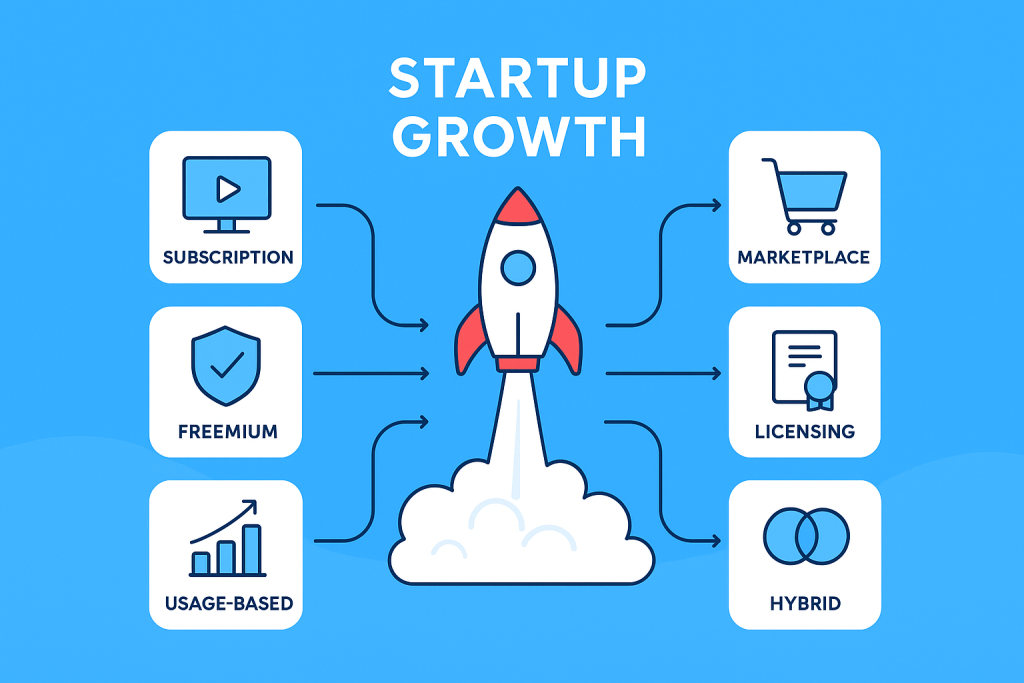
Startups have multiple ways to generate revenue, and choosing the right approach is crucial for growth and sustainability. The six main models include subscription, freemium, usage-based, marketplace, licensing, and hybrid. Each model offers unique benefits, from predictable recurring income to scalable, activity-driven revenue.
- Subscription: Predictable recurring income through monthly or annual plans
- Freemium: Attracts users with free access and converts them to paid tiers
- Usage-Based: Charges customers based on consumption, aligning cost with value
- Marketplace: Monetizes participation and transactions instead of products
- Licensing: Generates income from intellectual property with minimal operational load
- Hybrid: Combines multiple strategies to reduce risk and maximize profitability
Subscription Revenue Model — A Stable Engine for Predictable Growth
The subscription revenue model offers predictable income while fostering long-term customer loyalty. By charging recurring fees, startups can forecast revenue and allocate resources efficiently. This approach encourages engagement, reduces churn, and works best for products with ongoing value or updates. Subscription models support scalable growth and improve investor confidence.
- Predictable monthly or annual revenue
- Increased customer lifetime value
- Easier scaling and forecasting
- Stronger retention metrics
When the Subscription Revenue Model Works Best
This model performs best when offerings provide continuous value, such as SaaS platforms, membership programs, or educational content. Customers prefer predictable billing, which builds trust and long-term relationships. Tiered pricing, high retention, and value-driven features strengthen profitability. Transitioning from one-time sales to subscriptions requires clear communication of benefits and structured onboarding. Founders can leverage business consulting services to align subscription plans with market needs and customer expectations.
Metrics That Strengthen the Subscription Revenue Model
Monitoring key metrics ensures the subscription model remains profitable and sustainable. Essential metrics include:
- Churn Rate: Identifies customers leaving, highlighting retention gaps
- MRR (Monthly Recurring Revenue): Tracks predictable income
- NRR (Net Revenue Retention): Measures growth from existing customers
These metrics guide pricing decisions, forecasting, and customer retention strategies. Using analytics and digital transformation services can automate metric tracking, optimize engagement, and strengthen recurring revenue streams for long-term growth.
Freemium Revenue Model — Converting Free Users Into High-Value Customers
The freemium revenue model allows startups to attract a large user base by offering a free tier while encouraging upgrades to paid plans. This approach leverages psychological triggers like perceived value, scarcity, and social proof to motivate conversions. Free users experience the product before committing, increasing trust and engagement. By carefully structuring value ladders, startups can turn casual users into high-value customers.
- Low barrier to entry increases adoption
- Encourages product exploration
- Builds brand trust and credibility
- Drives paid upgrades through clear value
Free-to-paid conversion requires understanding user motivations and usage patterns. Tracking user behavior and engagement patterns ensures the right users are prompted to upgrade at the right time. Structured planning makes freemium strategies scalable and sustainable.
Why the Freemium Revenue Model Attracts and Converts Users
This model thrives on providing enough value in the free tier to engage users while creating compelling reasons to upgrade. Key elements include limited features, premium benefits, and time-based incentives. Startups use value ladders and clear upgrade paths to encourage conversion. Engaged users are more likely to pay for enhanced functionality, supporting sustainable monetization.
A Freemium Revenue Model Example Early-Stage Founders Can Use
For example, a SaaS project management tool may offer free basic task management while reserving advanced reporting and integrations for premium plans. Users experience the core value immediately, then upgrade for efficiency or collaboration features. Startups can design structured upgrade paths that generate predictable revenue, ensuring long-term scalability.
Usage-Based Revenue Model — Scaling Revenue Alongside Customer Activity
The usage-based revenue model charges customers according to their actual consumption, aligning cost with value received. This approach increases fairness, fosters trust, and encourages adoption by letting users pay only for what they use. It works well for APIs, cloud services, and utilities where usage can vary significantly. By tying revenue to activity, startups can scale income proportionally to customer growth and engagement.
- Encourages higher adoption by lowering entry barriers
- Rewards heavy users while accommodating light users
- Creates transparent, fair pricing
- Supports long-term revenue growth
Tracking usage patterns and feedback ensures pricing remains competitive and aligned with customer expectations. Implementing analytics helps optimize billing, reduce churn, and identify high-value customers early.
When the Usage-Based Revenue Model Becomes the Better Choice
This model excels when product value directly correlates to usage, such as API calls, cloud storage, or data processing. Customers perceive fairness in paying for what they consume, which builds trust and loyalty. Startups with variable consumption patterns benefit from predictable scaling, as high engagement naturally increases revenue.
A Usage-Based Revenue Model Example for Modern Startups
For example, a cloud storage platform may charge based on the amount of data stored and bandwidth used. Users can start small and expand as needed, while the company earns revenue proportionate to actual usage. API-driven platforms often employ this model to support long-term expansion without limiting growth potential, ensuring scalability and financial sustainability.
Marketplace Revenue Model — Monetizing Participation Instead of Products
The marketplace revenue model generates income by connecting buyers and sellers rather than selling products directly. Revenue typically comes from commissions, listing fees, or transaction charges. This model leverages network effects, where more participants increase value for all users. By focusing on engagement and liquidity, startups can scale rapidly while minimizing inventory and operational costs.
- Commission-based revenue drives growth
- Network effects enhance platform value
- Reduces operational overhead compared to direct sales
- Encourages repeated transactions and user retention
Building trust and seamless interactions is critical. Features like ratings, secure payments, and dispute resolution strengthen user confidence, which directly impacts revenue. Startups can also implement marketing and onboarding strategies to accelerate marketplace adoption.
Why the Marketplace Revenue Model Scales Faster
Marketplaces scale quickly due to network effects: each new participant attracts more users and transactions. Liquidity cycles ensure that both buyers and sellers remain engaged. Startups can optimize commissions and fees to balance growth and profitability. Platforms that prioritize trust, ease of use, and repeat interactions often achieve exponential revenue growth.
A Marketplace Revenue Model Example With Strong Growth
For example, a ride-sharing platform charges a percentage of each trip, rather than owning vehicles. As more drivers and riders join, transactions increase, boosting revenue naturally. Over time, the platform benefits from compounding network effects, creating a self-reinforcing growth loop that is scalable and sustainable for long-term expansion.
Licensing Revenue Model — Monetizing IP With Low Operational Load
The licensing revenue model allows startups to monetize intellectual property (IP) without selling products directly. By granting usage rights to other companies, founders earn predictable income with minimal operational effort. This approach is ideal for software, technology, or creative assets. Licensing reduces overhead, accelerates market reach, and protects proprietary innovations while generating recurring revenue.
- Generates income from existing IP
- Low operational and inventory costs
- Expands market reach through partners
- Provides predictable and recurring revenue
Licensing requires careful contracts and legal protections to secure rights. Startups can leverage partnerships and strategic agreements to maximize revenue while retaining ownership of core IP.
When the Licensing Revenue Model Outperforms Direct Selling
Licensing works best when startups develop specialized technology, software, or creative content that other businesses can use. It’s particularly effective for small teams or early-stage founders seeking revenue without scaling operations. By focusing on IP value rather than direct distribution, startups can monetize efficiently and reduce operational risk.
A Licensing Revenue Model Example for Technical Founders
For instance, a software tool may be licensed to multiple companies for internal use. Each license generates recurring revenue while the product continues to be developed centrally. This model allows technical founders to focus on innovation while building predictable, low-effort income, supporting sustainable growth and market expansion.
Hybrid Revenue Model — Combining Strengths for Higher Revenue Stability
The hybrid revenue model blends multiple monetization strategies to reduce risk and increase revenue stability. By combining approaches like subscription, usage-based, or licensing, startups can diversify income streams and adapt to changing market conditions. This flexibility allows businesses to capture value from different customer segments while maintaining consistent growth.
- Combines multiple revenue streams for resilience
- Reduces dependency on a single model
- Increases profitability through diversified income
- Enhances adaptability to market shifts
Implementing a hybrid model requires careful planning to ensure offerings complement each other. Founders must analyze customer behavior and align pricing strategies to maximize revenue without causing confusion or friction.
Why the Hybrid Revenue Model Builds Resilient Monetization
A hybrid approach mitigates the risks of relying on one revenue source. For example, subscription fees provide predictable cash flow while transactional or usage-based charges capture high-value customer activity. This model allows startups to respond to market fluctuations and evolving customer needs while sustaining growth.
A Hybrid Revenue Model Example Used by High-Growth Startups
For instance, a SaaS platform may charge a base subscription fee, offer premium add-ons, and take a percentage of marketplace transactions. This combination ensures predictable revenue, captures variable usage, and scales efficiently. Companies using hybrid models often achieve higher profitability and long-term sustainability compared to single-stream strategies.
Conclusion — Revenue Models Must Evolve With Market and Customer Shifts
Startups must continuously refine, test, and evolve their revenue models to stay aligned with market trends and customer behavior. No single model guarantees long-term success; adaptability is key. By analyzing metrics, experimenting with pricing strategies, and listening to user feedback, founders can optimize revenue streams. A flexible approach ensures sustainable growth, reduces risk, and maximizes profitability.
Integrating multiple revenue strategies, monitoring performance, and staying responsive to change creates a foundation for long-term business success. Startups that embrace evolution in their revenue approach often outperform competitors who rely solely on static models.
Frequently Asked Questions (FAQs)
1. What is the best revenue model for early-stage startups?
The best model depends on product type, customer behavior, and market demand. Startups often start with subscriptions or freemium models for predictability and scalability. Testing multiple approaches early helps identify what drives engagement and maximizes long-term revenue. Founders should focus on models that can evolve with market feedback.
2. When should a founder pivot their revenue model?
A pivot is necessary when current strategies fail to meet growth, retention, or revenue targets. Customer feedback, analytics, and market trends should guide the decision. Timely pivots can prevent losses, optimize monetization, and help startups align with emerging opportunities.
3. Is a hybrid revenue model suitable for new teams?
Yes, but it requires careful planning and prioritization. Combining models diversifies revenue, though simplicity is key for small teams early on. Gradually integrating multiple streams ensures scalability while minimizing operational complexity.
4. Which KPIs matter most when analyzing a revenue model?
Metrics like MRR, churn rate, NRR, and customer lifetime value (CLV) are critical for evaluating performance. Monitoring these KPIs enables data-driven decisions, identifies risks, and highlights growth opportunities. Consistent tracking ensures the revenue model remains aligned with business objectives.
5. How can founders validate a revenue model quickly?
Run small experiments, track conversions, and analyze user engagement. Early feedback helps refine pricing, feature offerings, and monetization paths. Validation ensures that the revenue model resonates with customers while supporting sustainable growth.
6. How do customer behavior and product type influence revenue model choice?
Understanding customer usage patterns, preferences, and willingness to pay is crucial. Certain products benefit more from recurring subscriptions, while others work better with usage-based or freemium models. Aligning the revenue strategy with actual behavior maximizes adoption and long-term profitability.