

Introduction: Modern Finance Needs a Smarter Backbone
In today’s rapidly changing business landscape, financial management has evolved far beyond spreadsheets and manual entries. Companies now demand intelligent systems that simplify accounting while improving accuracy, visibility, and control.
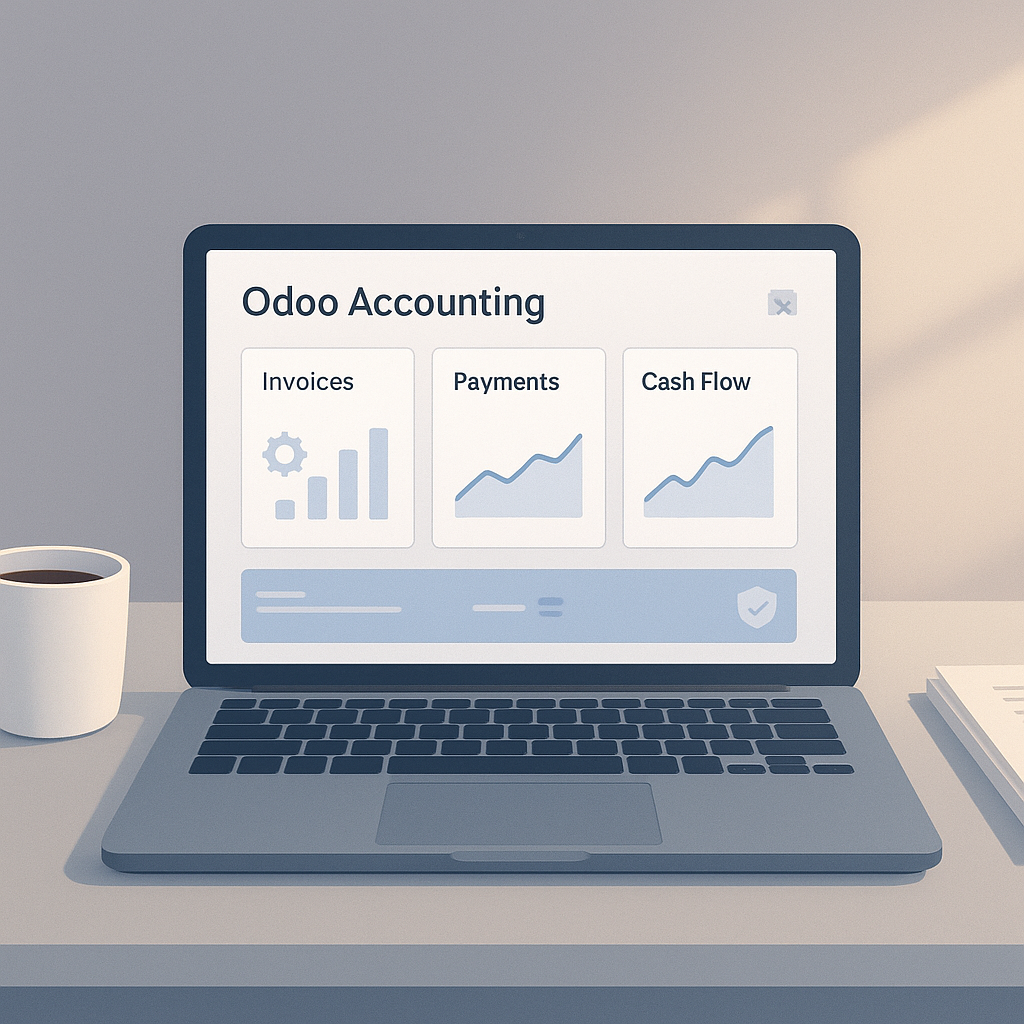
Odoo Accounting delivers exactly that — a powerful, unified solution built to automate invoicing, streamline payments, and provide real-time financial insights. It helps organizations transition from reactive bookkeeping to proactive financial strategy.
With growing market competition and tighter compliance requirements, automation is no longer optional — it’s a necessity. By integrating seamlessly with sales, CRM, and reporting tools, Odoo Accounting enables faster, data-driven decision-making.
It also aligns perfectly with ongoing digital transformation initiatives, empowering finance teams to focus on growth instead of repetitive manual tasks — creating a stronger foundation for smarter, scalable financial success.
Odoo Accounting Transforming Invoicing: From Manual Work to Automated Precision
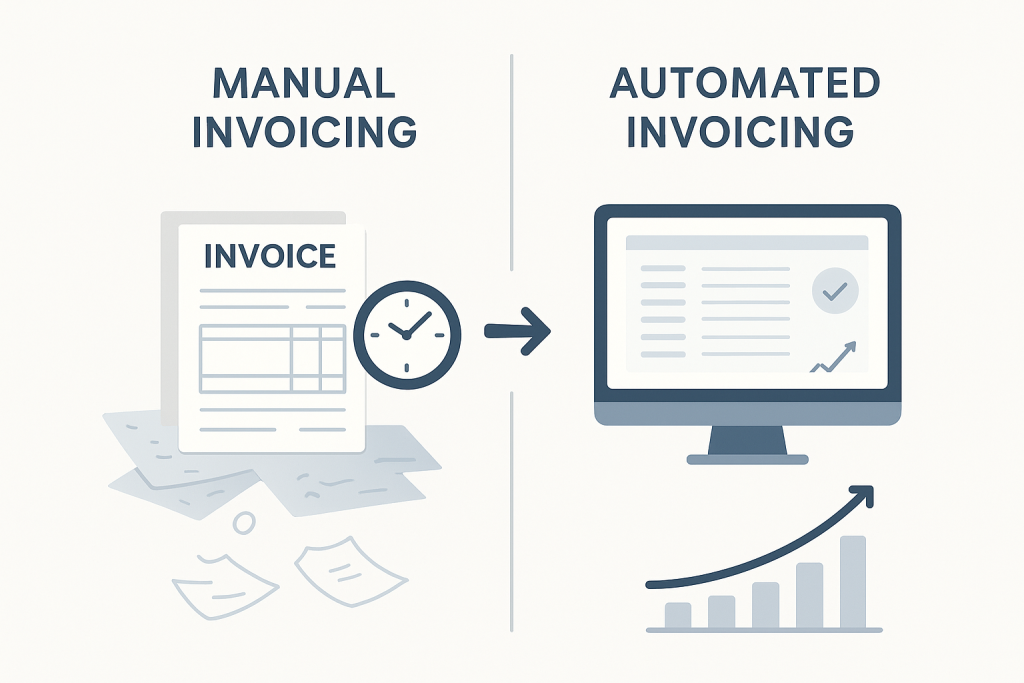
Invoicing remains one of the most time-consuming and error-prone areas of financial management. Manual processes often cause delays, missed payments, and duplication of data. However, with modern automation tools, these challenges can be completely eliminated through intelligent system integration.
The platform connects sales, CRM, and accounting systems so that every invoice is generated instantly and accurately. As data flows automatically across departments, errors drop sharply, and teams spend far less time on administrative follow-ups. This shift not only improves efficiency but also builds a stronger foundation for scalability and consistent growth.
By automating routine invoicing tasks, businesses strengthen accuracy, enhance cash flow, and create a more reliable financial ecosystem that can expand as operations grow.
Auto-Generated Invoices that Save Time
Traditional invoicing can consume hours of valuable time, often delaying payments and creating bottlenecks. With automated workflows, invoices are created immediately after a sale, contract, or subscription confirmation. This eliminates repetitive manual entry and prevents costly data errors.
Every invoice reflects real-time business activity, ensuring accuracy across all financial operations. As teams gain visibility and confidence in their data, they can move from repetitive work to strategic analysis. This automation brings efficiency, precision, and transparency to the entire billing cycle.
Recurring Billing and Multi-Currency Support
For businesses that rely on recurring payments, automation brings remarkable convenience. The system can generate invoices automatically at regular intervals, ensuring consistent cash flow and minimizing the risk of missed billing cycles.
Furthermore, multi-currency support simplifies international transactions by updating exchange rates automatically. This ensures financial consistency across global operations and compliance with diverse regional requirements. With these features combined, organizations gain the flexibility to operate globally while maintaining accuracy and control.
Error-Free Validation and Approval Process
Accuracy is critical for every financial document. The system’s validation and approval workflows ensure that each invoice is verified before it’s finalized. This step eliminates discrepancies and enforces company-wide financial policies.
Custom approval hierarchies can be defined to match different management levels. Managers can instantly review, approve, or reject invoices, keeping processes efficient and accountable. These built-in validation layers not only improve audit readiness but also enhance transparency across the entire financial chain.
Odoo Accounting Simplifying Payments: Faster, Secure, and Connected
Managing payments efficiently is essential to maintaining healthy cash flow and financial stability. Yet, many businesses still struggle with delayed collections and manual reconciliation. A smart, connected payment system changes that completely by bringing automation, integration, and visibility into every transaction.
Through unified tools, finance teams can process payments faster, ensure accuracy, and minimize errors. The result is a more predictable and transparent payment cycle where teams spend less time chasing invoices and more time focusing on financial growth and planning.
By centralizing all payment operations, companies enhance security, compliance, and control, creating a seamless financial experience for both internal teams and customers.
Seamless Payment Gateway Integrations
Payment delays often stem from disconnected systems and limited payment options. Integrating multiple payment gateways within a single platform allows businesses to manage all transactions centrally. Popular gateways like PayPal, Stripe, and Razorpay can be connected directly, allowing customers to pay instantly through their preferred method.
This integration not only speeds up collection but also ensures real-time payment tracking. Finance teams gain better control over transactions and can quickly identify pending payments or issues. Ultimately, automation makes the entire process faster, safer, and far more customer-friendly.
Smart Payment Terms and Automation
Establishing structured payment terms helps maintain steady cash flow. Businesses can set flexible due dates, offer early-payment discounts, and automate reminders for overdue invoices. This approach improves collections and reduces the burden of manual follow-ups.
Moreover, automated notifications create a consistent communication loop with clients. Instead of spending hours sending reminders, finance teams can rely on pre-set schedules that handle this efficiently. It strengthens client relationships while ensuring that cash flow remains predictable and on time.
Reconciliation Made Effortless
Matching payments with invoices is traditionally one of the most tedious accounting tasks. With automation, reconciliation becomes nearly instant, as every payment received is automatically linked to its corresponding invoice. This eliminates confusion and ensures the accuracy of financial records.
Automated reconciliation also provides a real-time overview of outstanding payments and settled accounts. Teams can easily monitor financial health without manual tracking or complex spreadsheets. As a result, overall efficiency increases while errors and delays become a thing of the past.
Odoo Accounting Strengthening Cash Flow: Predictability through Automation
Cash flow defines how resilient and adaptable a business truly is. However, unpredictable payment schedules and delayed collections often disrupt financial balance. By adopting automation, organizations can transform cash flow management from reactive to proactive.
Automation tools track transactions in real time, ensuring complete visibility of inflows and outflows. Finance teams can forecast trends, identify gaps early, and plan accordingly. As a result, decision-makers gain the confidence to allocate resources efficiently and reduce dependency on manual forecasting.
A streamlined approach improves liquidity, enhances control, and helps businesses sustain stability even in fluctuating markets. Key advantages include:
- Faster detection of payment delays
- Improved visibility of financial trends
- Greater accuracy in forecasting and planning
Automated Payment Follow-Ups that Work
Timely collections are critical for maintaining a strong cash position. Automated follow-ups ensure that reminders reach customers before due dates, minimizing the risk of overdue invoices. Messages can be sent via email, SMS, or letters — all without manual intervention.
Moreover, these reminders can be fully customized. Businesses can choose tone, timing, and format to suit client preferences. This ensures professionalism while improving collection efficiency. By maintaining consistent and automated communication, finance teams can reduce friction and keep cash inflows steady.
Real-Time Cash Flow Insights
Visibility into financial operations helps businesses respond faster to challenges. Real-time dashboards display current balances, upcoming receivables, and overdue payments in one consolidated view. This instant access allows teams to detect potential issues before they impact liquidity.
Additionally, financial leaders can generate visual summaries and comparative charts that simplify decision-making. Instead of relying on static reports, they can track how revenue and expenses fluctuate daily. These insights lead to smarter budgeting and proactive management, reducing the need for manual reconciliations.
Forecasting Tools for Future Planning
Accurate forecasting separates growing businesses from struggling ones. With intelligent forecasting tools, companies can predict cash flow trends based on historical patterns, payment behavior, and seasonal cycles. This predictive insight allows leaders to make strategic financial decisions in advance.
To further enhance planning, the system generates detailed projections of income and expenses. Teams can visualize expected inflows and outflows weeks or even months ahead. By combining these forecasts with automated reminders and analytics, businesses build a more reliable financial roadmap for growth.
Odoo Accounting Data-Driven Clarity: Turning Numbers into Smart Decisions
Modern finance thrives on insights, not just reports. Businesses that rely on outdated data often miss opportunities for growth. With advanced reporting and analytics, financial teams can move from reactive tracking to proactive decision-making.
Data visualization tools convert complex numbers into actionable insights, empowering CFOs to monitor performance in real time. This clarity helps them understand where revenue comes from, which areas need attention, and how to optimize spending, and how to optimize spending through digital transformation practices.
When numbers become transparent, organizations gain the confidence to plan ahead, ensuring that every financial decision is guided by accurate and timely information. Key benefits include:
- Faster analysis and decision-making
- Simplified reporting across departments
- Improved forecasting accuracy
Dynamic Reports and Custom Dashboards
Comprehensive financial visibility is vital for modern businesses. Through interactive dashboards and tailored reports, teams can analyze performance metrics instantly. The system automatically generates key financial statements such as profit and loss, balance sheets, and cash flow reports — all updated in real time.
Additionally, dashboards can be customized to track essential KPIs like overdue payments, expense ratios, and profit margins. Because this data refreshes continuously, leaders always have a clear picture of the company’s performance. Quick visual summaries help identify opportunities and bottlenecks faster, streamlining financial planning.
Connected Modules for Total Financial Visibility
True financial insight requires connection across all business functions. Integration between Accounting, Inventory, CRM, and HR ensures that every transaction aligns perfectly with operational data. This reduces the risk of inconsistencies and promotes transparency across departments.
Moreover, synchronized data flow allows finance teams to identify trends that impact performance company-wide. For example:
- Sales insights influence cash flow planning
- HR data affects payroll forecasting
- Inventory costs shape profit margins
This unified view transforms fragmented processes into a cohesive, data-driven ecosystem.
Predictive Insights for Smarter Strategies
Predictive analytics turns historical data into a roadmap for future performance. By analyzing payment patterns, customer behavior, and seasonal trends, finance teams can anticipate changes and adjust strategies proactively.
Furthermore, trend forecasting helps organizations identify risk areas before they become challenges. Automated reports highlight recurring issues such as late payments or rising expenses. As a result, leaders can take preventive measures rather than corrective ones, ensuring consistent financial stability and sustained growth.
Odoo Accounting Scaling with Confidence: Implementation and Growth
As businesses expand, their financial systems must adapt just as quickly. A scalable accounting framework ensures that growth never compromises accuracy or efficiency. When implemented strategically, automation transforms financial operations into a system that evolves with the business.
Successful scaling depends on proper configuration, team readiness, and ongoing optimization. With the right approach— supported by product engineering services —businesses can reduce setup complexities, streamline processes, and build a sustainable foundation for future expansion.
To ensure smooth implementation, organizations should:
- Define clear accounting goals before migration
- Train teams early on new automation features
- Monitor performance regularly to identify improvement areas
This approach not only ensures consistency but also builds confidence in every stage of financial growth.
Simplifying Adoption for Teams
Adopting a new accounting system can feel overwhelming, especially for non-technical staff. However, step-by-step onboarding makes the process seamless. Clear guidance, structured training, and practical documentation help teams get comfortable quickly and minimize resistance.
Additionally, assigning internal champions within departments improves adoption rates. These trained members can assist others, ensuring smoother knowledge transfer and consistent practices. A gradual rollout backed by expert support helps teams transition without workflow interruptions, maintaining efficiency throughout the implementation phase.
Continuous Optimization for Long-Term Value
Once implementation is complete, continuous improvement ensures the system performs at its best. Regular audits help identify redundant configurations, outdated workflows, or missed automation opportunities.
Furthermore, upgrading to new features as they become available enhances overall efficiency. Finance leaders should encourage feedback loops within departments to spot recurring challenges. By doing so, the organization remains agile, compliant, and aligned with its long-term financial vision — ensuring lasting value from its accounting framework.
Integrating Staff Augmentation for Implementation Success
For many growing companies, hiring dedicated experts for short-term implementation projects is not always feasible. Staff augmentation offers a flexible way to access skilled professionals who can accelerate setup and customization.
These specialists work alongside internal teams to handle complex tasks such as system configuration, module integration, and workflow automation. The approach allows businesses to scale expertise temporarily without permanent hires. As a result, companies benefit from faster deployment, fewer errors, and better performance throughout the transition.
Conclusion: The Future Belongs to Automated Finance
The evolution of financial management has reached a stage where automation is no longer optional — it’s essential. Modern businesses need systems that not only record transactions but also analyze, predict, and adapt. By embracing smarter financial tools, organizations can finally move away from outdated manual workflows and toward intelligent, connected systems.
Automation empowers finance teams to make faster, data-backed decisions. It enhances accuracy, improves collaboration, and ensures that every transaction contributes to strategic growth. As business environments become more competitive, those who adopt automation gain the agility to lead, not follow.
Ultimately, the future of finance belongs to companies that combine insight with innovation. By transforming financial operations into a scalable, data-driven ecosystem, businesses can focus less on numbers and more on creating lasting value.