

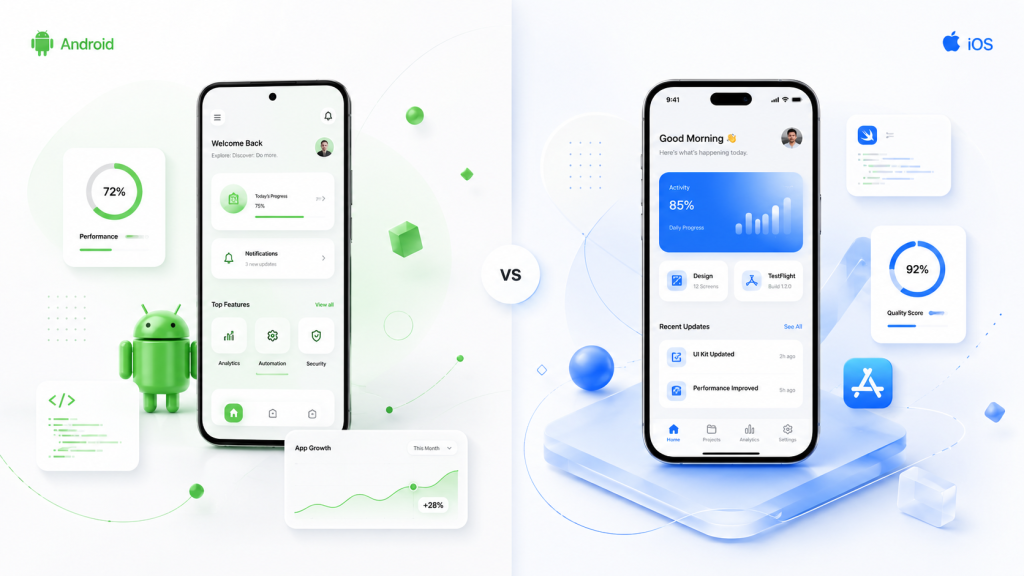
Android vs iOS in 2026: Why Platform Choice Matters More Than Ever
Mobile experiences are evolving rapidly; therefore, businesses can no longer select between android and iOS development based only on popularity or device numbers. While Android continues dominating global smartphone adoption, iOS consistently generates stronger subscription revenue and premium engagement. Moreover, changing customer expectations, AI-driven personalization, and connected ecosystems are reshaping how mobile products are designed and scaled. As a result, startups and SaaS businesses must evaluate far more than development cost before choosing a platform.
At the same time, Android and iOS now influence customer retention, monetization, scalability, and even operational efficiency differently. Although both ecosystems support advanced mobile capabilities, their design philosophies, security expectations, and user behavior continue diverging in 2026. Therefore, businesses planning long-term digital products should understand the critical differences between android and iOS development before investing in architecture, design systems, and deployment strategies that may later become expensive to maintain or scale.
Why Android and iOS Decisions Carry More Business Risk in 2026
Choosing between android and iOS development has become a far more strategic decision because modern mobile ecosystems now shape revenue, retention, and scalability differently. Previously, businesses often focused only on launch speed or development cost; however, platform-specific behavior now influences long-term product growth. Additionally, customer expectations around AI personalization, privacy, and seamless interactions continue increasing across industries. As a result, selecting the wrong ecosystem may reduce engagement while increasing maintenance and optimization costs over time.
Furthermore, mobile applications are now deeply connected with digital services, wearable devices, and intelligent workflows. Because of this shift, businesses increasingly evaluate platform architecture alongside broader product planning and even long-term digital transformation strategies. Although android provides unmatched reach and hardware flexibility, iOS still delivers stronger consistency and premium engagement in several industries. Therefore, businesses should evaluate customer behavior, monetization goals, and scalability expectations before committing resources to either ecosystem.
How AI-Driven Experiences Are Changing Mobile Expectations
AI-powered experiences are rapidly changing how users interact with android and iOS applications in 2026. While Android integrates deeply with adaptive recommendations, predictive automation, and flexible AI-driven interfaces, iOS focuses heavily on privacy-centered intelligence and seamless personalization. Consequently, customer expectations now extend beyond responsive design or application speed. Users increasingly expect intelligent search, contextual suggestions, and behavior-driven experiences integrated directly into everyday workflows.
Moreover, businesses building modern mobile platforms must design applications that adapt dynamically to user intent and engagement patterns. Although AI features were previously considered optional enhancements, they are now influencing retention and long-term usability across competitive industries. Because of this evolution, both android and iOS ecosystems are prioritizing machine learning integration within navigation, personalization, and customer interaction systems. Therefore, businesses ignoring AI-driven mobile behavior may struggle to maintain engagement as intelligent mobile experiences continue becoming the standard expectation.
Why Startups Cannot Treat Both Platforms the Same
Startups often assume android and iOS development follow identical launch strategies; however, both ecosystems behave very differently in terms of monetization, testing complexity, and customer engagement. While android supports larger global reach and broader accessibility, iOS typically attracts users with stronger subscription and in-app purchase behavior. As a result, startups operating with limited resources must carefully prioritize platform selection based on audience behavior rather than market popularity alone.
Additionally, development and optimization cycles vary significantly between android and iOS ecosystems. Android applications often require broader testing because of device fragmentation, whereas iOS applications generally benefit from simplified optimization across a more controlled environment. Therefore, businesses planning scalable mobile products should align platform strategy with customer demographics, revenue expectations, and long-term growth plans. A carefully planned approach often prevents startups from overspending on unsupported features or launching across both ecosystems before validating actual user demand.
Android vs iOS Market Share: Understanding the Real Competitive Landscape
Android and iOS dominate the global mobile economy differently; therefore, businesses should avoid evaluating platforms using market share statistics alone. Although android controls most worldwide smartphone adoption, iOS continues leading in premium digital spending and subscription-based engagement. Additionally, regional behavior, purchasing patterns, and device accessibility influence how applications perform across both ecosystems. Because of this, businesses targeting scalable growth must evaluate audience intent rather than assuming larger device volume automatically creates stronger commercial outcomes.
At the same time, mobile adoption trends continue evolving as customer expectations shift toward connected ecosystems and personalized experiences. While android benefits from hardware diversity and affordability, iOS consistently performs strongly within premium markets and digitally mature regions. Consequently, businesses planning mobile products should align platform decisions with audience behavior, monetization strategy, and long-term expansion goals. Organizations building advanced mobile products often integrate scalable mobile app development frameworks early so platform-specific experiences remain consistent during future growth and optimization phases.
Android’s Advantage in Reach and Device Diversity
Android continues dominating global smartphone adoption because it supports a broad range of manufacturers, pricing models, and hardware capabilities. Consequently, businesses targeting large consumer markets often prioritize android to maximize accessibility across emerging and price-sensitive regions. Additionally, android applications can reach customers using budget devices, foldable phones, tablets, and customized operating environments. This level of flexibility allows businesses to scale digital products faster across highly diverse user segments.
However, android’s hardware diversity also creates operational complexity during development and testing cycles. Because devices vary significantly in processing power, screen dimensions, and software behavior, developers must optimize applications carefully for multiple environments. Nevertheless, businesses pursuing aggressive market expansion frequently accept this complexity because android still delivers unmatched reach across global mobile audiences. Therefore, companies focused on scale, advertising revenue, or consumer adoption often consider android a strategic advantage despite the additional optimization effort required during deployment and maintenance.
Why iOS Still Controls the Premium User Segment
Although iOS maintains a smaller global device share, it consistently attracts users with stronger digital spending behavior and higher long-term engagement. Consequently, businesses focused on subscriptions, premium experiences, or SaaS products often prioritize iOS during early launch stages. Additionally, Apple’s tightly controlled ecosystem creates a highly consistent user experience across devices, which strengthens customer trust and simplifies optimization. This consistency frequently improves retention and monetization outcomes within premium digital markets.
Moreover, iOS users generally adopt software updates faster than android users, allowing businesses to implement modern features more efficiently. Because of this, product teams can optimize experiences for fewer device variations while maintaining stable performance across the ecosystem. Furthermore, industries such as fintech, healthcare, and productivity software frequently favor iOS because privacy expectations and premium engagement align strongly with their customer behavior. Therefore, businesses prioritizing quality engagement over mass-market volume often consider iOS strategically valuable despite its smaller worldwide reach.
Regional Trends Businesses Should Analyze Before Launch
Regional adoption patterns influence Android and iOS performance significantly; therefore, businesses should evaluate geographic behavior before selecting a development strategy. While android dominates large portions of Asia, Africa, and developing economies, iOS continues performing exceptionally well across North America and several European markets. Additionally, purchasing power, internet infrastructure, and smartphone pricing directly affect platform preference in different regions. Businesses ignoring these differences may struggle to align product strategy with actual audience behavior.
Furthermore, customer expectations vary considerably across regional ecosystems and mobile cultures. Android users in emerging economies often prioritize accessibility and functionality, whereas iOS users in mature digital markets typically value seamless experiences and ecosystem integration. Because of this, businesses expanding internationally should avoid assuming one platform strategy will perform equally well everywhere. Instead, analyzing regional behavior, monetization potential, and device usage patterns often creates stronger launch planning and improves long-term scalability across competitive mobile environments.
User Behavior Differences Between Android and iOS Consumers
User behavior varies significantly between android and iOS ecosystems; therefore, businesses should evaluate engagement patterns before planning product strategy or monetization models. Although android applications often achieve larger install numbers, iOS applications consistently generate stronger subscription revenue and premium engagement across several industries. Additionally, purchasing behavior, session duration, and customer retention patterns differ because both ecosystems attract distinct user demographics. As a result, platform selection directly affects long-term product growth and revenue sustainability.
Furthermore, behavioral insights now influence mobile planning more than raw download statistics alone. While Android supports broader accessibility and large-scale acquisition, iOS frequently delivers stronger loyalty and recurring spending behavior. Consequently, businesses building subscription-driven products or premium digital services often prioritize platform-specific optimization strategies early. Product teams investing in scalable product engineering frameworks also analyze customer behavior continuously because engagement trends strongly impact future feature development, retention planning, and monetization performance across competitive mobile ecosystems.
How Spending Patterns Differ Across Both Platforms
Spending behavior continues differing sharply between android and iOS users in 2026. While android audiences generally contribute higher install numbers and ad engagement, iOS users consistently spend more on subscriptions and in-app purchases. Consequently, businesses relying heavily on recurring revenue often prioritize iOS optimization during early growth stages. Additionally, payment behavior within Apple’s ecosystem tends to remain more consistent because customers are already accustomed to premium digital purchases and integrated payment experiences.
Several factors continue influencing these monetization differences across ecosystems:
- iOS users typically spend more on subscriptions
- Android applications attract broader ad-based audiences
- Premium SaaS products often perform strongly on iOS
- Freemium applications scale effectively on android
Because of these behavioral differences, businesses should align monetization strategy with audience expectations rather than relying solely on global market share statistics.
Engagement and Retention Trends Businesses Often Ignore
Engagement behavior across android and iOS platforms extends far beyond installation numbers or initial onboarding metrics. While android applications often achieve wider reach, iOS users generally demonstrate stronger retention and longer-term product interaction. Additionally, customer expectations around interface quality, personalization, and ecosystem consistency continue influencing retention rates differently across both platforms. Consequently, businesses ignoring behavioral nuances may struggle with declining engagement even when acquisition numbers appear strong initially.
Moreover, platform-specific usage habits shape how customers interact with mobile products daily. Android users frequently prioritize accessibility and functionality across diverse device categories, whereas iOS users often expect seamless synchronization and highly polished experiences. Because of this, engagement strategies should reflect platform-specific interaction patterns rather than duplicated user journeys. Businesses optimizing onboarding flows, personalization systems, and performance consistency according to ecosystem behavior frequently achieve stronger retention outcomes and improved long-term customer satisfaction.
Which Platform Delivers Better Long-Term Customer Value?
Long-term customer value depends heavily on how users interact with android and iOS applications over time. Although android ecosystems deliver larger user volume and broader accessibility, iOS audiences often generate stronger lifetime value through recurring subscriptions and premium engagement. Consequently, businesses evaluating scalability should analyze customer retention and monetization together instead of prioritizing acquisition volume alone. A larger audience does not always guarantee stronger long-term profitability across competitive mobile markets.
Additionally, customer loyalty behaves differently within both ecosystems because purchasing habits and engagement expectations vary significantly. iOS users frequently remain active longer within premium applications, whereas android ecosystems often support rapid growth and broader market penetration. Therefore, businesses should evaluate their revenue model carefully before selecting a platform strategy. Products focused on recurring subscriptions may benefit more from iOS engagement, while advertising-driven platforms often scale effectively through Android’s broader audience reach and device accessibility.
Development Costs in Android and iOS Projects
Development costs in android and iOS projects extend far beyond coding hours or launch timelines because long-term optimization and maintenance significantly influence total investment. Although android applications provide greater flexibility and broader reach, testing complexity often increases operational costs over time. Meanwhile, iOS development generally benefits from streamlined optimization because Apple maintains tighter hardware and software consistency. Therefore, businesses should evaluate scalability, maintenance, and testing requirements before estimating realistic mobile development budgets.
Additionally, application architecture, feature complexity, and post-launch support directly impact development planning across both ecosystems. While startups often prioritize rapid deployment, poorly planned mobile infrastructure frequently creates expensive maintenance challenges later. Consequently, businesses investing in scalable custom software development solutions usually focus on long-term architecture decisions rather than launch costs alone. Product teams balancing scalability, performance, and optimization early often reduce future operational risk while maintaining stronger customer experiences across evolving android and iOS ecosystems.
Why Android Development Often Requires Larger Testing Budgets
Android development frequently requires larger testing budgets because the ecosystem supports thousands of devices with varying hardware capabilities and software versions. Consequently, developers must optimize applications across multiple screen sizes, processors, and operating environments before release. Additionally, compatibility testing becomes more demanding as foldable devices, customized operating systems, and hardware variations continue increasing. Businesses underestimating these testing requirements often face performance inconsistencies and negative user experiences after launch.
Several operational challenges continue increasing android QA complexity:
- Multiple device manufacturers and hardware profiles
- Different android operating system versions
- Wide screen-size variations across smartphones and tablets
- Region-specific device performance differences
Because of these variables, android development often demands broader QA cycles and ongoing optimization throughout the product lifecycle.
How iOS Simplifies Performance Optimization
iOS development generally simplifies optimization because Apple controls both hardware and software across its ecosystem. As a result, developers can predict device behavior more accurately while maintaining stronger application consistency across supported products. Additionally, iOS users adopt software updates faster than android audiences, allowing businesses to deploy new features and security improvements more efficiently. This controlled environment frequently reduces compatibility issues and accelerates performance tuning during development cycles.
Moreover, streamlined optimization positively affects long-term maintenance and operational planning. Because fewer device configurations require testing, product teams can focus more heavily on usability, interface refinement, and feature stability. Consequently, businesses launching premium digital products often benefit from faster optimization timelines within iOS ecosystems. Although iOS development may involve strict ecosystem guidelines, many businesses consider the reduced testing complexity worthwhile because consistent performance directly strengthens customer trust and long-term engagement.
Budget Planning for MVPs and Scalable Applications
Budget planning for android and iOS applications should include far more than initial development costs because scalability and maintenance heavily influence long-term investment. While startups frequently focus on MVP launch speed, ongoing optimization, feature expansion, and testing eventually become major operational expenses. Consequently, businesses planning scalable products should evaluate architecture flexibility and ecosystem-specific maintenance requirements early. Short-term budgeting decisions often create larger financial challenges during later growth stages.
Businesses planning modern mobile applications should typically account for:
- Initial design and development costs
- QA testing and device optimization
- Post-launch maintenance requirements
- Security updates and scalability improvements
Therefore, businesses aligning financial planning with long-term product strategy generally maintain more stable growth and avoid unexpected development bottlenecks as mobile ecosystems continue evolving.
Android and iOS Design Philosophy: Different UX Expectations
Android and iOS follow very different design philosophies; therefore, businesses should avoid assuming identical interface strategies will perform equally well across both ecosystems. While Android emphasizes flexibility, customization, and adaptive experiences, iOS prioritizes consistency, minimalism, and controlled interactions. Additionally, customer expectations differ because users become accustomed to platform-specific navigation patterns and visual behavior over time. As a result, interface decisions strongly influence retention, usability, and long-term customer trust within mobile applications.
Moreover, design systems now affect far more than aesthetics because they shape accessibility, engagement, and product perception directly. Businesses increasingly recognize that poorly adapted interfaces create friction even when application functionality remains strong. Consequently, teams building scalable mobile ecosystems often integrate structured quality assurance and testing workflows early to validate usability across android and iOS environments. Careful design adaptation frequently improves onboarding, reduces abandonment rates, and creates more intuitive experiences for customers using different mobile ecosystems.
Material Design and Android’s Flexible Interface Model
Android applications typically follow Material Design principles, which emphasize adaptability, motion, and interface customization across different devices. Consequently, developers gain greater flexibility when designing layouts for smartphones, tablets, foldables, and hybrid interfaces. Additionally, Android supports broader customization options that allow businesses to create highly personalized user experiences. This flexibility often benefits products targeting diverse audiences and rapidly evolving device environments.
Several characteristics continue defining android’s interface philosophy:
- Dynamic layouts across varying screen sizes
- Greater customization for navigation and themes
- Flexible widget and interaction systems
- Broader hardware adaptability
Because of these design principles, android applications frequently support highly adaptive experiences; however, additional testing and optimization are usually required to maintain consistency across devices.
Apple’s Human Interface Guidelines and Consistency
iOS applications rely heavily on Apple’s Human Interface Guidelines, which prioritize simplicity, clarity, and predictable interaction behavior. Consequently, users often experience smoother navigation and stronger interface consistency across Apple devices. Additionally, Apple encourages restrained design patterns that minimize unnecessary complexity while maintaining visual polish and usability. This consistency frequently strengthens customer trust and creates highly intuitive mobile experiences within premium digital products.
Furthermore, Apple’s ecosystem emphasizes refined animations, balanced spacing, and controlled navigation systems that improve interaction predictability. Because of this approach, businesses developing iOS applications often focus heavily on usability refinement and seamless customer journeys. Although customization flexibility may appear more limited than android, the structured interface environment frequently improves accessibility and long-term engagement. Therefore, businesses prioritizing polished user experiences and premium interaction quality often benefit from iOS-centered design strategies.
Why Businesses Should Avoid Identical UI Across Platforms
Businesses frequently attempt to duplicate identical interfaces across Android and iOS applications; however, this approach often weakens usability and customer satisfaction. While visual consistency may appear efficient during development, platform-specific navigation habits strongly influence how users interact with mobile products. Consequently, ignoring ecosystem expectations can create friction, reduce engagement, and negatively impact retention. Customers generally expect applications to behave naturally within their preferred operating environment.
Moreover, interface adaptation improves trust because users recognize familiar navigation systems and interaction behaviors instantly. Android audiences often expect customization and flexible layouts, whereas iOS users typically prioritize minimalism and polished transitions. Therefore, businesses should adapt interface decisions according to platform conventions instead of forcing universal design patterns everywhere. Mobile products optimized for ecosystem-specific behavior frequently deliver stronger usability, smoother onboarding experiences, and higher long-term customer satisfaction across competitive digital markets.
Monetization Strategy: Choosing the Right Revenue Model
Monetization remains one of the most important differences between android and iOS development because platform behavior directly influences revenue outcomes. While Android delivers larger audience reach and download volume, iOS consistently generates stronger spending across premium applications. Additionally, user expectations regarding subscriptions, advertising, and digital purchases vary considerably between ecosystems. Therefore, businesses should evaluate monetization strategy before selecting a development roadmap rather than treating revenue planning as a post-launch activity.
Moreover, sustainable growth depends on aligning business models with customer behavior. Although both Android and iOS support multiple revenue streams, performance often varies by industry and audience type. Consequently, startups and SaaS companies should analyze subscription potential, advertising opportunities, and customer acquisition costs carefully. Businesses investing in scalable web development and mobile ecosystems frequently integrate monetization planning early because platform-specific revenue behavior significantly impacts long-term profitability and growth potential.
Why iOS Continues Leading Subscription Revenue
iOS continues outperforming Android in subscription revenue because users within Apple’s ecosystem generally demonstrate stronger willingness to pay for premium experiences. Additionally, payment systems are highly integrated, which reduces friction during purchases and subscription renewals. As a result, businesses offering productivity tools, SaaS platforms, streaming services, and premium content often experience stronger recurring revenue on iOS than on Android.
Several factors contribute to iOS subscription performance:
- Higher average spending per user
- Strong adoption of recurring payment models
- Faster acceptance of premium digital services
- Greater loyalty toward ecosystem-based products
Therefore, businesses relying heavily on recurring revenue frequently evaluate iOS as a priority platform when customer lifetime value and subscription growth are central business objectives.
How Android Supports Scalable Ad-Based Growth
Android remains highly effective for businesses pursuing advertising-driven growth because it offers access to a significantly larger global audience. Consequently, applications focused on media consumption, gaming, content distribution, and freemium services often perform exceptionally well within the android ecosystem. Additionally, broader device accessibility allows businesses to acquire users at scale across diverse geographic and economic segments.
Furthermore, advertising models benefit from android’s extensive market reach and high installation volume. Although individual spending may be lower compared with iOS users, total audience size often compensates through advertising impressions and engagement opportunities. Therefore, businesses seeking rapid audience growth frequently choose android-first strategies when monetization depends primarily on advertising, sponsored content, or hybrid freemium approaches designed to maximize user acquisition and engagement.
Matching Revenue Models With Platform Behavior
Selecting the right revenue model requires understanding how customers interact with android and iOS applications throughout the user lifecycle. While subscription-based products often perform strongly on iOS, advertising-supported applications typically scale effectively across android markets. Consequently, businesses should align monetization strategies with actual user behavior rather than applying identical revenue assumptions across both ecosystems.
A practical platform-revenue alignment often includes:
- SaaS products → iOS-first subscription strategy
- Consumer media apps → Android-focused advertising model
- Productivity tools → Hybrid subscription approach
- Marketplace platforms → Multi-channel monetization
Therefore, businesses that match platform strengths with customer expectations generally create more sustainable revenue streams while reducing monetization friction and improving long-term profitability.
Security and Privacy Expectations Across Android and iOS
Security and privacy have become critical business considerations because users increasingly evaluate applications based on trust, transparency, and data protection practices. While Android and iOS both continue improving security frameworks, they approach privacy and ecosystem control differently. Additionally, regulatory requirements across industries such as healthcare, fintech, and SaaS are increasing pressure on businesses to prioritize secure application environments. As a result, platform choice can influence both customer confidence and compliance readiness.
Furthermore, security decisions now affect more than technical infrastructure because they directly impact retention and brand reputation. Although many risks can be mitigated through proper architecture and governance, platform characteristics still shape overall security strategies. Consequently, businesses building sensitive digital products often evaluate ecosystem controls, update cycles, and permission management carefully. Understanding how Android and iOS approach privacy helps organizations create stronger mobile experiences while reducing operational and reputational risk.
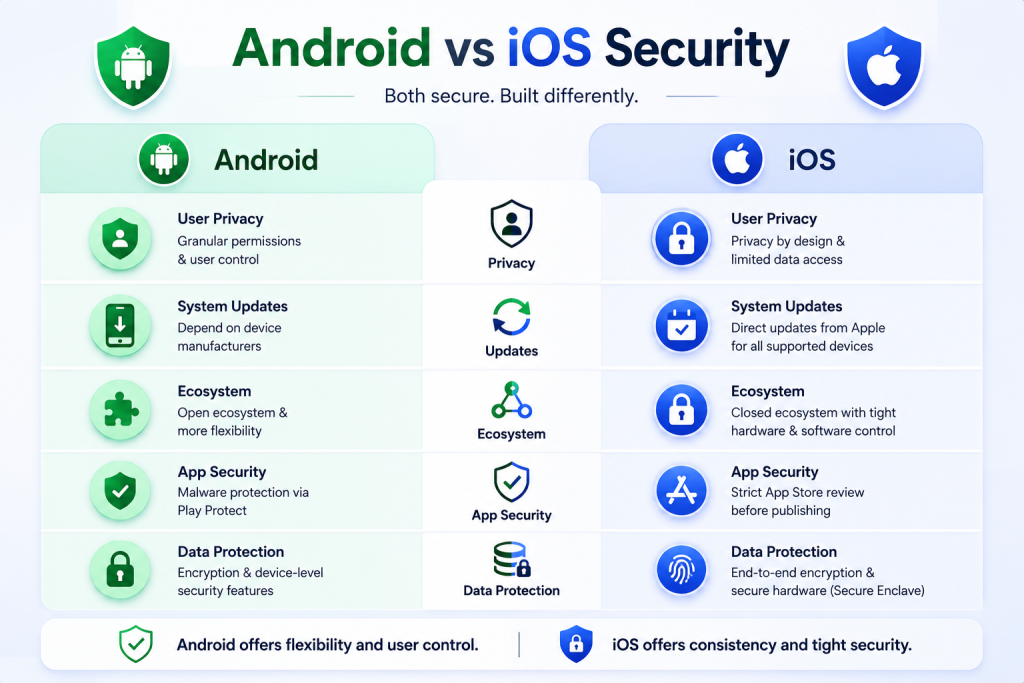
Android’s Open Ecosystem and Security Complexity
Android’s open ecosystem provides exceptional flexibility; however, that same openness can introduce additional security considerations. Because devices are produced by numerous manufacturers, update schedules and security controls may vary significantly across the ecosystem. Consequently, businesses developing android applications must often implement broader testing and monitoring strategies to maintain consistent protection across supported devices.
Several factors influence android security management:
- Diverse hardware environments
- Varying update adoption rates
- Manufacturer-specific software customizations
- Broader third-party integration opportunities
Although these characteristics increase complexity, organizations that implement robust security frameworks can successfully protect users while benefiting from android’s flexibility and extensive market reach.
Why iOS Built a Strong Privacy-First Reputation
iOS has developed a strong reputation for privacy because Apple maintains strict control over hardware, software, and application permissions. Additionally, privacy-focused policies provide users with greater visibility into how personal information is collected and used. As a result, customers often associate iOS applications with stronger data protection and transparency compared with many alternative ecosystems.
Moreover, consistent security updates strengthen customer confidence and simplify compliance planning for businesses operating in regulated industries. Because platform-wide updates are adopted quickly, organizations can implement new privacy protections more efficiently. Consequently, sectors such as healthcare, financial services, and enterprise software frequently view iOS as a favorable environment for applications handling sensitive customer information and regulated digital interactions.
How Security Directly Influences User Trust
Security influences user trust because customers increasingly expect businesses to protect personal information proactively. While performance and usability remain important, data protection now plays a significant role in retention and long-term engagement. Therefore, applications that demonstrate strong privacy practices often build stronger customer relationships and improve brand credibility across competitive markets.
Businesses can strengthen trust by focusing on:
- Transparent data collection policies
- Secure authentication mechanisms
- Regular security updates
- Clear permission management practices
Consequently, organizations that prioritize privacy and security from the beginning often experience stronger customer confidence, reduced compliance risk, and improved long-term adoption across Android and iOS ecosystems.
Cross-Platform vs Native Development in 2026
The debate between cross-platform and native development continues because businesses must balance speed, cost, performance, and scalability. While native android and iOS development provides maximum platform optimization, cross-platform frameworks allow teams to build applications for multiple ecosystems from a shared codebase. Additionally, modern frameworks have matured considerably, reducing many limitations that previously affected performance and user experience. Therefore, platform strategy should align with business goals rather than technology trends alone.
Furthermore, development decisions made during early product planning often influence maintenance costs and scalability years later. Although faster deployment remains attractive for startups, long-term growth may require platform-specific optimization in certain situations. Consequently, organizations frequently evaluate customer expectations, feature complexity, and engineering resources before selecting a development approach. Businesses investing in scalable mobile app development initiatives often compare both models carefully to balance operational efficiency with future product requirements.
When Flutter and React Native Deliver Strong Results
Cross-platform frameworks such as Flutter and React Native continue gaining popularity because they accelerate development while reducing engineering overhead. Consequently, startups and SMBs can launch Android and iOS applications faster without maintaining completely separate codebases. Additionally, modern framework capabilities support strong performance, responsive interfaces, and extensive third-party integrations across many application categories.
Cross-platform development is particularly effective when businesses need:
- Faster market entry
- Shared development resources
- Consistent functionality across platforms
- Controlled development budgets
Therefore, many organizations choose cross-platform solutions when speed, efficiency, and broad platform coverage outweigh the need for extensive platform-specific customization.
Situations Where Native Development Still Performs Better
Native development remains valuable for applications requiring deep hardware integration, advanced graphics processing, or highly optimized performance. Because Android and iOS native environments provide direct access to platform-specific capabilities, developers can achieve greater control over performance, responsiveness, and user experience. Consequently, industries with demanding technical requirements often continue investing in dedicated native applications.
Native development frequently benefits:
- Gaming applications
- AR and VR experiences
- Advanced fintech solutions
- Performance-intensive enterprise tools
Although development costs may increase, businesses often accept the investment because native optimization supports stronger reliability and long-term performance within complex application environments.
Balancing Development Speed and Product Scalability
Businesses rarely choose development approaches based solely on cost because scalability remains equally important. While cross-platform frameworks reduce initial effort, future growth requirements may eventually require deeper platform-specific customization. Therefore, product teams should evaluate both immediate business goals and long-term technical needs before committing to a development strategy.
A balanced decision framework often considers:
- Product complexity
- Growth projections
- Engineering resources
- Performance requirements
Consequently, organizations that evaluate scalability alongside launch speed typically avoid costly redevelopment projects later. Aligning development architecture with long-term business objectives often creates more sustainable outcomes across both Android and iOS ecosystems.
Best Platform Choices for Different Industries
Choosing between Android and iOS becomes easier when businesses evaluate industry-specific user behavior instead of relying solely on market statistics. While some industries benefit from android’s extensive reach, others achieve stronger results through iOS engagement and premium customer segments. Additionally, regulatory requirements, customer expectations, and monetization strategies often influence platform priorities. Therefore, businesses should align platform selection with industry needs rather than following a universal development approach.
Moreover, successful mobile strategies depend on understanding where customers spend time, how they interact with applications, and what drives conversions. Although Android and iOS offer similar technical capabilities, their audiences often behave differently. Consequently, businesses that tailor platform decisions according to industry dynamics frequently achieve stronger retention, improved monetization, and more efficient development investments. Industry-specific planning often prevents costly platform misalignment during growth and expansion phases.
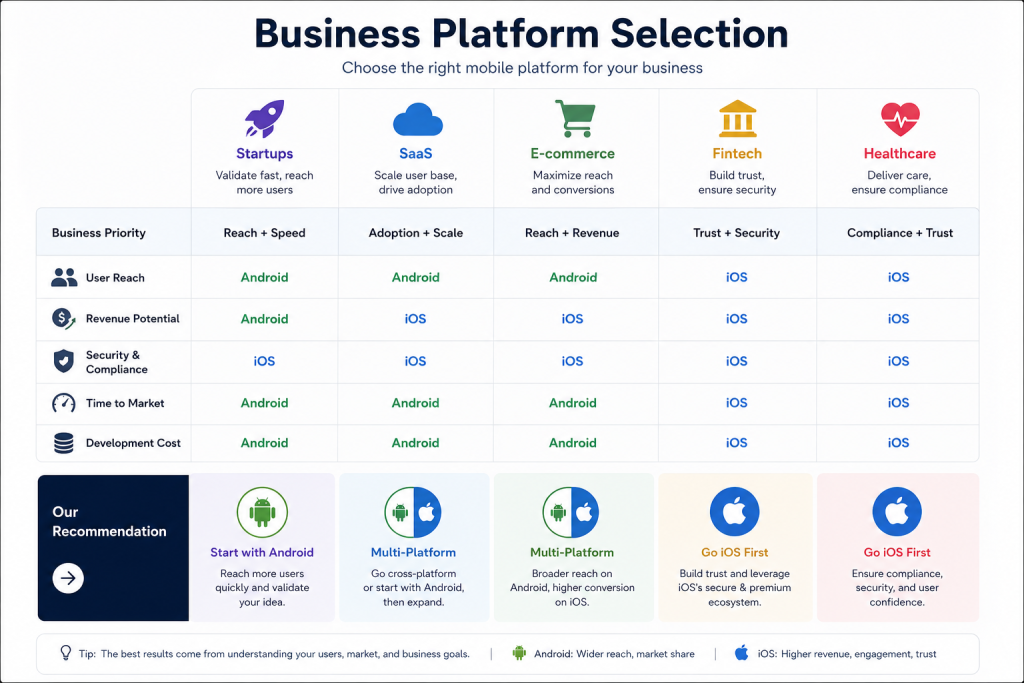
Why SaaS and Productivity Apps Often Prioritize iOS
Many SaaS and productivity applications prioritize iOS because users within Apple’s ecosystem typically demonstrate stronger subscription adoption and premium software engagement. Additionally, professionals and business users often rely heavily on Apple’s integrated ecosystem, creating opportunities for seamless workflows and recurring revenue models. As a result, SaaS companies frequently view iOS as an effective platform for validating premium product offerings and maximizing customer lifetime value.
Several factors support iOS adoption for SaaS products:
- Strong subscription behavior
- Higher premium software adoption
- Consistent user experience across devices
- Greater engagement among professional users
Therefore, businesses offering productivity tools, collaboration platforms, and premium software services often launch on iOS first before expanding toward broader android audiences and international markets.
How Android Benefits E-Commerce and Consumer Platforms
Android offers significant advantages for e-commerce and consumer-focused applications because of its extensive global reach and accessibility. Consequently, businesses targeting mass-market audiences often prioritize android to maximize visibility across different economic segments and geographic regions. Additionally, lower device entry barriers allow companies to engage larger customer bases, particularly within emerging markets where mobile commerce continues expanding rapidly.
Furthermore, advertising-driven customer acquisition strategies frequently perform well within the android ecosystem due to larger audience availability. Businesses operating online marketplaces, retail platforms, and consumer services often benefit from android’s scale advantages. Therefore, companies focused on high transaction volume and broad customer acquisition typically view android as a valuable growth channel capable of supporting aggressive market expansion and user acquisition goals.
Strategic Recommendations for FinTech, Healthcare, and Startups
FinTech, healthcare, and startup environments often require more strategic platform evaluation because customer trust, compliance requirements, and growth constraints vary considerably. While fintech and healthcare businesses frequently favor iOS because of stronger privacy perceptions and premium engagement, startups may prioritize platforms based on budget limitations and customer demographics. Consequently, development decisions should reflect business objectives rather than industry assumptions alone.
A practical approach often includes:
- FinTech → iOS-first for trust and retention
- Healthcare → iOS-focused compliance strategies
- Early-stage startups → Platform based on audience validation
- Consumer startups → Android for broader reach
Therefore, businesses operating within specialized industries should evaluate customer expectations carefully before determining their long-term android and iOS development roadmap.
Common Android and iOS Development Mistakes Businesses Make
Many businesses invest heavily in mobile applications yet still struggle because critical platform-specific considerations are overlooked during planning. While android and iOS development offer substantial growth opportunities, strategic mistakes often increase costs, delay launches, and reduce customer adoption. Additionally, assumptions based on competitor behavior frequently lead to poor resource allocation. Therefore, understanding common development mistakes can help organizations avoid unnecessary setbacks and improve long-term outcomes.
Furthermore, mistakes made during early planning stages often become significantly more expensive after launch. Although development frameworks and tools continue improving, poor decision-making remains a major contributor to project inefficiency. Consequently, businesses should focus on validation, testing, and platform-specific optimization before scaling aggressively. Organizations investing in structured product engineering processes often identify potential risks earlier, helping teams maintain scalability, improve usability, and reduce avoidable operational challenges.
Launching on Both Platforms Too Early
Many startups attempt to launch simultaneously on android and iOS because broader coverage appears attractive during early growth stages. However, this approach often increases development costs and operational complexity before customer demand has been properly validated. Consequently, limited resources become spread across multiple priorities, reducing the team’s ability to refine product-market fit effectively.
Several challenges commonly emerge when businesses scale too early:
- Higher development and maintenance costs
- Slower iteration cycles
- Increased testing requirements
- Reduced focus on customer validation
Therefore, startups frequently achieve better outcomes by prioritizing one platform initially and expanding only after validating user demand, engagement patterns, and monetization potential.
Ignoring Platform-Specific User Expectations
User expectations differ significantly across Android and iOS ecosystems; however, businesses often underestimate these behavioral differences during product design. While android users may value customization and flexibility, iOS users frequently expect refined navigation and highly polished interactions. Consequently, applying identical experiences across both ecosystems can create usability friction and reduce customer satisfaction.
Moreover, platform conventions influence trust and engagement more than many organizations realize. Customers often notice when applications fail to align with familiar interaction patterns. Therefore, businesses should adapt navigation structures, interface behavior, and user journeys according to platform-specific expectations. Aligning experiences with ecosystem norms typically improves adoption, retention, and overall customer perception throughout the product lifecycle.
Underestimating Maintenance and Testing Requirements
Many organizations allocate budgets primarily toward development while underestimating the ongoing costs associated with maintenance and testing. Although launch milestones receive significant attention, post-release optimization often determines long-term application success. Consequently, insufficient planning can create performance issues, compatibility challenges, and delayed feature releases after deployment.
Businesses should prepare for ongoing responsibilities such as:
- Operating system updates
- Security patches
- Device compatibility testing
- Performance optimization
Therefore, sustainable mobile strategies require continuous investment beyond launch. Organizations that prioritize maintenance planning early often reduce technical debt while preserving stronger customer experiences across evolving android and iOS environments.
Future Trends Shaping Android and iOS Development
Android and iOS development continues evolving rapidly as emerging technologies reshape customer expectations and business priorities. While traditional mobile experiences remain important, innovation is increasingly driven by artificial intelligence, connected ecosystems, and adaptive interfaces. Additionally, advancements in hardware and software are creating new opportunities for personalization and cross-device engagement. Therefore, businesses should monitor future trends carefully to remain competitive within changing mobile markets.
Moreover, technology adoption cycles continue accelerating across both ecosystems. Although certain innovations may initially target specific user groups, successful trends often become mainstream quickly. Consequently, businesses that anticipate platform evolution can adapt more efficiently and capitalize on emerging opportunities. Organizations investing in scalable software development solutions frequently prepare for these shifts early, ensuring their products remain flexible as mobile ecosystems continue expanding beyond traditional smartphone experiences.
AI-Powered Personalization and Predictive Experiences
Artificial intelligence is transforming how users interact with android and iOS applications by enabling more personalized and predictive experiences. Consequently, mobile platforms increasingly adapt content, recommendations, and workflows based on user behavior. Additionally, AI-driven automation helps reduce friction during navigation, onboarding, and customer engagement processes, improving overall usability.
Several AI-driven capabilities are becoming increasingly common:
- Personalized content recommendations
- Predictive search and navigation
- Intelligent customer support
- Automated workflow optimization
Therefore, businesses integrating AI thoughtfully can improve engagement, retention, and customer satisfaction while creating more responsive and efficient mobile experiences across both ecosystems.
Foldables, Wearables, and Connected Ecosystems
Mobile experiences now extend beyond smartphones because foldables, wearables, and connected devices are becoming increasingly important. Consequently, developers must design applications capable of functioning seamlessly across multiple screen sizes and interaction environments. Additionally, customers expect continuity between devices, creating demand for synchronized experiences throughout connected ecosystems.
Furthermore, Android and iOS are expanding support for multi-device interactions that connect smartphones with watches, tablets, and emerging hardware categories. Because of this shift, businesses should prioritize flexible interface design and adaptive user experiences. Organizations that prepare for connected ecosystems early often gain competitive advantages as customers increasingly engage with applications across multiple devices and environments.
Why Voice and Spatial Interfaces Are Expanding
Voice interactions and spatial computing continue influencing the future of android and iOS development because users increasingly seek more natural ways to interact with technology. While traditional touch interfaces remain dominant, voice-driven commands and immersive digital environments are gaining broader adoption. Consequently, businesses must consider how new interaction models may affect user expectations and engagement.
Several emerging developments are driving this evolution:
- Voice-first user experiences
- Augmented reality integrations
- Spatial computing environments
- Hands-free digital interactions
Therefore, businesses that explore these technologies strategically may unlock new engagement opportunities while preparing their applications for the next generation of mobile and connected digital experiences.
Android vs iOS: Which Platform Should Businesses Choose?
Choosing between android and iOS requires more than comparing market share because platform decisions influence growth, customer acquisition, and long-term profitability. While Android offers exceptional reach and flexibility, iOS often delivers stronger premium engagement and monetization opportunities. Additionally, audience demographics, regional demand, and business objectives can significantly affect platform performance. Therefore, businesses should evaluate customer behavior and strategic goals before selecting a development direction.
Moreover, there is no universally correct answer because different products succeed under different market conditions. Although many startups begin with a single platform, expansion plans often evolve as customer demand increases. Consequently, businesses should align platform investments with measurable objectives rather than assumptions. Organizations developing scalable mobile ecosystems frequently combine customer insights, budget considerations, and growth projections to determine whether android, iOS, or a multi-platform approach offers the strongest long-term business value.
Choose Android for Reach and Market Expansion
Android remains a strong choice for businesses focused on customer acquisition, international expansion, and large-scale adoption. Because it powers a majority of smartphones globally, android provides access to highly diverse audiences across both developed and emerging markets. Additionally, businesses can engage customers across a wide range of device categories and price points, creating significant growth opportunities.
Android may be the better option when businesses prioritize:
- Broad audience reach
- Emerging market expansion
- Advertising-driven monetization
- High-volume customer acquisition
Therefore, organizations targeting large consumer audiences often view android as a practical platform for achieving scale while maintaining accessibility across multiple geographic regions and customer segments.
Choose iOS for Premium Engagement and Revenue
iOS frequently becomes the preferred platform when businesses prioritize premium customer experiences, subscription revenue, and long-term engagement. Because users often demonstrate stronger purchasing behavior, many SaaS companies and subscription-based services launch on iOS first. Additionally, Apple’s controlled ecosystem creates greater consistency, which can improve user satisfaction and simplify optimization efforts.
Several business scenarios often favor iOS:
- Subscription-focused applications
- Premium digital products
- Professional productivity tools
- High-value customer segments
Consequently, businesses emphasizing retention, recurring revenue, and premium brand positioning frequently consider iOS a strategic investment despite its smaller global device share compared with android.
Choose Both Platforms for Long-Term Scalability
Launching on both android and iOS can be beneficial when businesses have validated demand, secured resources, and established clear growth objectives. While maintaining two ecosystems requires greater investment, it also allows organizations to maximize market coverage and customer accessibility. Consequently, businesses pursuing aggressive expansion often adopt multi-platform strategies once core product-market fit has been achieved.
Furthermore, platform diversification reduces dependence on a single audience segment while supporting broader revenue opportunities. However, businesses should ensure development, maintenance, and testing resources are available before expanding. Therefore, a dual-platform approach generally works best when growth priorities outweigh short-term budget constraints and operational complexity can be managed effectively across both ecosystems.
Conclusion: Making the Right Android vs iOS Decision for Sustainable Growth
Android and iOS development continue shaping the mobile landscape in different ways; therefore, platform selection should always align with business strategy rather than popularity alone. While android provides unmatched reach and device diversity, iOS consistently excels in premium engagement, customer loyalty, and subscription-driven revenue. Additionally, development costs, security expectations, user behavior, and industry requirements all influence platform performance differently. As a result, businesses must evaluate multiple factors before committing resources to a mobile ecosystem.
Moreover, emerging technologies such as AI-powered personalization, connected devices, and spatial computing are making platform-specific experiences increasingly important. Consequently, startups, SaaS companies, and product teams should focus on customer needs, monetization goals, and long-term scalability when planning mobile products. By understanding the critical differences between android and iOS development, businesses can make informed decisions that support sustainable growth, stronger customer experiences, and greater long-term return on investment.
Frequently Asked Questions
1. Is Android or iOS development more affordable in 2026?
Android development may require higher testing and optimization costs because of device fragmentation. However, actual expenses depend on application complexity, features, and long-term maintenance requirements.
2. Which platform generates higher app revenue?
iOS generally produces stronger subscription and in-app purchase revenue. Meanwhile, android often delivers greater download volume and advertising opportunities because of its broader audience reach.
3. Should startups launch on Android or iOS first?
Startups should prioritize the platform that best matches their target audience and monetization strategy. Many subscription-focused products begin with iOS, while mass-market applications often choose Android.
4. Is cross-platform development a good option in 2026?
Yes. Modern frameworks such as Flutter and React Native support efficient development across android and iOS while reducing time-to-market and engineering costs.
5. Why do android apps require more testing than iOS apps?
Android supports a wide variety of devices, manufacturers, screen sizes, and operating system versions. Consequently, developers must perform more compatibility testing to ensure consistent performance.