


Why the Mobile App Is Central to Modern Enterprises
In today’s digital economy, the mobile app has evolved far beyond its original consumer-focused purpose. Instead, it now functions as a strategic enterprise interface that connects employees, customers, and business systems. As organizations continue adopting modern technologies, the mobile app increasingly supports real-time access to enterprise data, enabling faster communication and more responsive decision-making. Consequently, many enterprises view mobile platforms as a critical layer of their digital ecosystem.
Moreover, digital transformation initiatives require tools that provide continuous connectivity, operational visibility, and seamless user experiences. Therefore, the mobile app enables organizations to extend enterprise capabilities beyond traditional workplace environments. At the same time, when integrated with broader initiatives such as digital transformation strategies, mobile solutions help businesses modernize workflows and improve service delivery. Ultimately, the mobile app strengthens enterprise agility while supporting long-term technological innovation.
Understanding Enterprise Digital Transformation
Enterprise digital transformation refers to the systematic integration of digital technologies across business operations. As organizations attempt to remain competitive, the mobile app has gradually become a key access point for enterprise systems. Instead of relying on traditional desktop-based workflows, businesses increasingly adopt mobile platforms to enable continuous connectivity and operational flexibility. Consequently, teams can access enterprise tools, dashboards, and communication channels regardless of location.
Furthermore, digital transformation involves redesigning business models, improving customer engagement, and modernizing infrastructure. Therefore, the mobile app acts as a digital bridge between enterprise systems and users, helping organizations deliver faster services and improved collaboration. At the same time, enterprises pursuing broader digital transformation initiatives often combine mobile technologies with advanced infrastructure and cloud systems. Ultimately, the mobile app supports data accessibility, operational efficiency, and enterprise-wide innovation.
The Shift from Legacy Systems to Digital Infrastructure
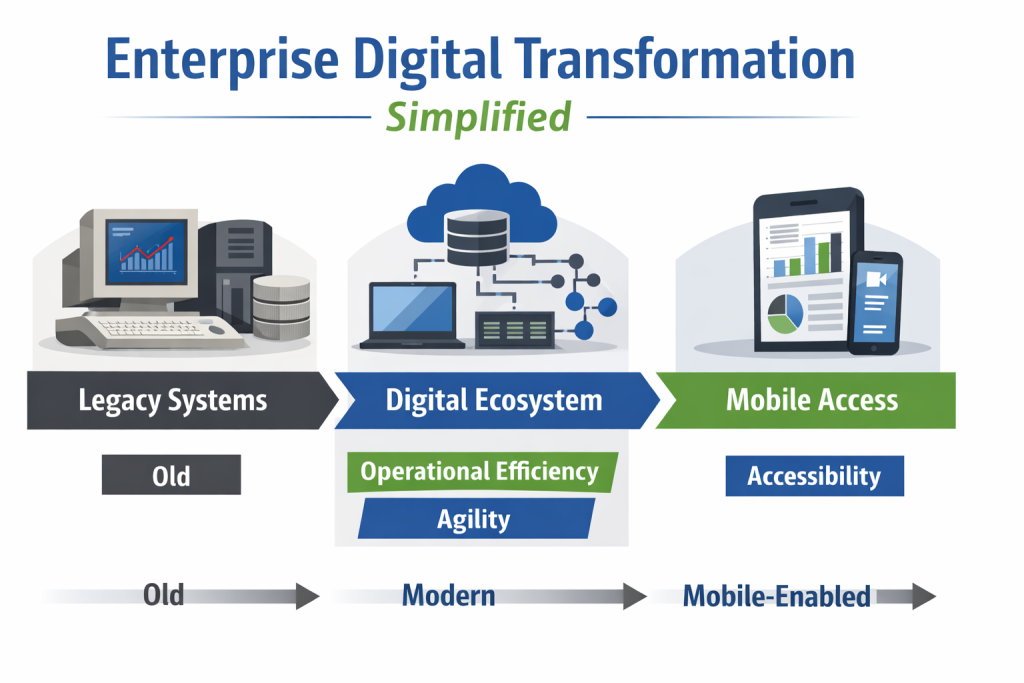
For many enterprises, legacy systems once formed the backbone of operational workflows. However, these systems often limit flexibility and slow decision-making. Consequently, organizations are gradually replacing rigid infrastructures with integrated digital ecosystems. During this transition, the mobile app becomes an important interface that allows employees to interact with enterprise platforms in real time.
Moreover, modern enterprise environments increasingly depend on customized digital systems that support scalable business processes. As organizations modernize their infrastructure, mobile platforms provide a reliable way to connect users with enterprise tools. Therefore, the mobile app strengthens operational accessibility while ensuring that employees can interact with systems regardless of location. Ultimately, this transition toward digital infrastructure enhances organizational agility, technological resilience, and long-term innovation.
Accessibility and Mobility as Transformation Drivers
Accessibility has become one of the most influential factors shaping enterprise technology adoption. As work environments evolve, organizations require tools that allow employees to remain productive beyond traditional office settings. Therefore, the mobile app enables remote access to enterprise tools, collaboration platforms, and operational dashboards.
Furthermore, mobility supports faster responses to business challenges because decision-makers can review information instantly. Consequently, enterprises gain improved operational visibility and quicker decision cycles. In addition, mobile technologies allow teams to remain connected to essential workflows even when operating in distributed environments. As a result, the mobile app ensures that enterprise systems remain accessible and responsive. Ultimately, this level of accessibility significantly enhances organizational adaptability, workforce efficiency, and operational continuity.
How Mobile App Innovation Improves Enterprise Agility
Innovation within the mobile app ecosystem significantly strengthens enterprise agility. As markets evolve rapidly, organizations require tools that allow them to respond to operational challenges and customer demands quickly. Therefore, mobile technologies support real-time communication, faster workflows, and improved collaboration across departments. Consequently, enterprises can operate with greater efficiency while maintaining flexibility in dynamic environments.
Moreover, modern mobile solutions often integrate with cloud infrastructure and enterprise systems. As a result, the mobile app becomes an essential interface through which employees monitor projects, analyze data, and manage operations. In many cases, organizations build these mobile solutions as part of broader product engineering initiatives that enable scalable digital platforms. Ultimately, continuous innovation in the mobile app ecosystem allows enterprises to maintain operational agility, faster decision-making, and improved business responsiveness.
Real-Time Data Access and Operational Visibility
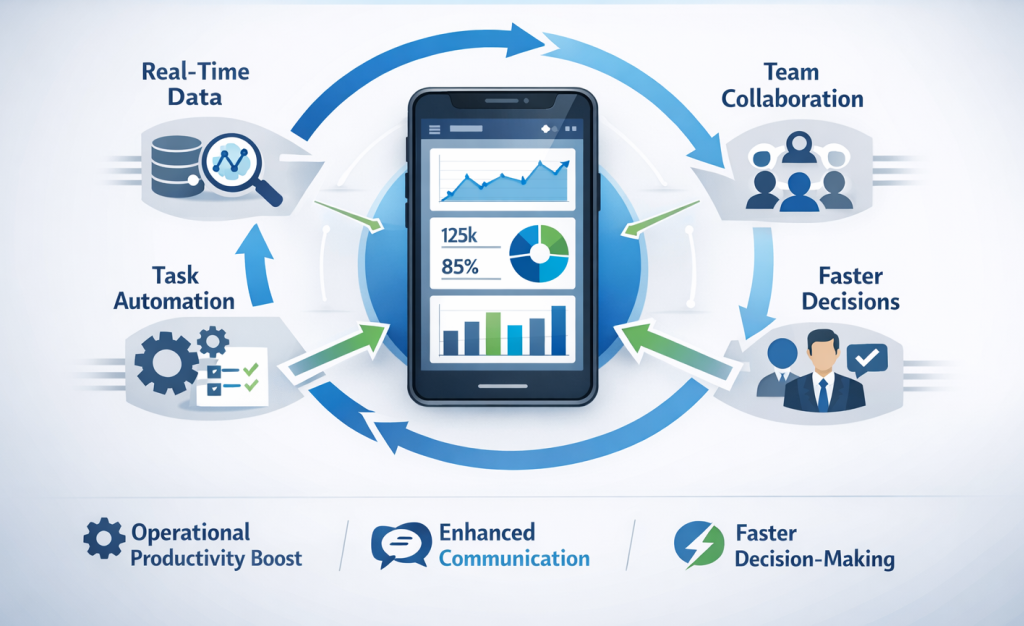
Access to accurate and timely data has become essential for enterprise decision-making. Therefore, the mobile app allows employees and managers to access real-time dashboards, operational reports, and performance metrics directly from mobile devices. Consequently, organizations gain improved visibility into their ongoing operations.
Moreover, real-time access to enterprise data supports data-driven leadership decisions. Managers can quickly identify operational issues, monitor project progress, and evaluate performance trends without waiting for traditional reporting cycles. In addition, mobile platforms make it easier to analyze information and share updates with teams instantly. As a result, the mobile app strengthens operational transparency, faster problem resolution, and strategic responsiveness.
Enhancing Workforce Productivity Through Mobile Platforms
Workforce productivity improves significantly when employees can access enterprise tools without technical barriers. Therefore, the mobile app allows teams to manage workflows, communicate instantly, and coordinate tasks from virtually any location. Consequently, organizations reduce delays caused by traditional communication channels.
Additionally, mobile platforms support collaboration across distributed teams by enabling instant messaging, task tracking, and project coordination tools. Employees can quickly review updates, respond to project needs, and stay connected with colleagues throughout the workday. As a result, mobile platforms help streamline daily operations and reduce inefficiencies. Ultimately, the mobile app strengthens workforce efficiency, collaborative productivity, and operational continuity.
Strengthening Customer Experience Through Mobile Platforms
Customer experience has become a critical factor influencing enterprise competitiveness. As digital expectations grow, organizations increasingly rely on the mobile app to deliver seamless and convenient services. Therefore, mobile platforms provide businesses with a direct channel through which they can interact with customers and gather valuable feedback. Consequently, enterprises gain deeper insights into user behavior and preferences.
Furthermore, the mobile app supports personalized digital interactions, allowing organizations to deliver targeted services and recommendations. At the same time, businesses frequently integrate mobile technologies into broader mobile application development strategies to improve service delivery. As a result, enterprises can provide faster responses and more efficient digital services. Ultimately, the mobile app plays a crucial role in strengthening customer engagement, accessibility, and long-term digital relationships.
Personalization and User-Centric Digital Services
Modern customers expect digital services that reflect their individual needs and preferences. Therefore, enterprises increasingly use the mobile app to create personalized user experiences based on behavioral insights and usage data. Consequently, businesses can deliver tailored recommendations, notifications, and digital services.
Moreover, personalization helps organizations strengthen customer satisfaction and brand trust. By analyzing user interactions, enterprises can better understand expectations and continuously improve digital offerings. Additionally, mobile platforms enable companies to update features quickly in response to changing customer needs. As a result, the mobile app becomes an important platform for delivering customer-focused digital innovation.
Continuous Customer Interaction Through Mobile Channels
Digital engagement requires consistent communication between businesses and their customers. Therefore, the mobile app allows enterprises to maintain continuous interaction through notifications, support channels, and service updates. Consequently, organizations can respond quickly to customer inquiries and requests.
In addition, mobile platforms enable companies to deliver information through multiple communication methods, including:
- Real-time service notifications
- Customer support messaging
- Transaction confirmations and updates
As a result, businesses improve service transparency while maintaining ongoing communication with their users. Furthermore, consistent engagement strengthens customer loyalty and long-term relationships. Ultimately, the mobile app provides enterprises with a reliable platform for maintaining continuous digital communication.
Emerging Technologies Expanding Mobile App Capabilities
Technological progress continues to expand what the mobile app can accomplish within enterprise environments. As organizations adopt advanced tools, mobile platforms are increasingly integrated with technologies that enable automation, predictive analysis, and connected infrastructure. Consequently, the mobile app evolves from a simple interface into a dynamic enterprise platform that supports complex operations and digital services.
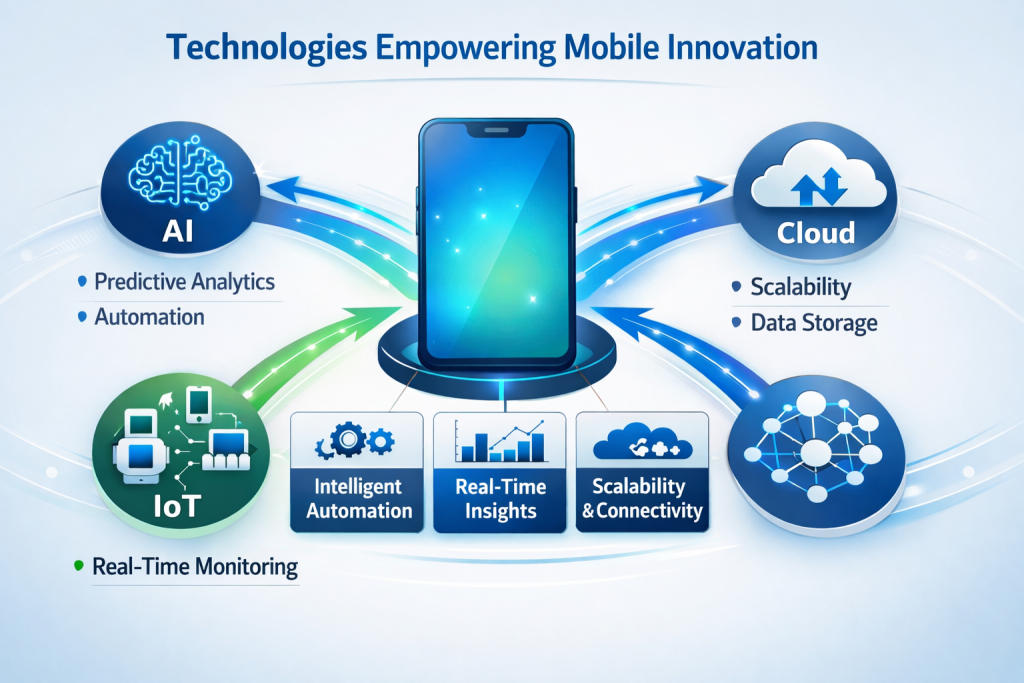
Moreover, modern enterprises increasingly combine mobile platforms with artificial intelligence, Internet of Things systems, and scalable cloud infrastructure. As a result, organizations can improve operational visibility, streamline workflows, and automate routine tasks. At the same time, these integrations enable businesses to collect and analyze large volumes of data through mobile channels. Ultimately, the mobile app becomes a foundation for intelligent decision-making, connected systems, and scalable digital innovation.
Artificial Intelligence and Predictive Intelligence
Artificial intelligence is transforming how enterprises analyze and utilize data within digital platforms. Therefore, the mobile app increasingly integrates AI-powered analytics and predictive intelligence tools that help organizations identify patterns and anticipate business needs. Consequently, companies can make more informed decisions while improving operational efficiency.
Furthermore, predictive intelligence enables enterprises to automate routine tasks and reduce manual workload. For example, AI algorithms can analyze user behavior, forecast demand patterns, and generate actionable insights for decision-makers. As a result, the mobile app becomes a platform where data-driven recommendations and automated processes improve productivity. Ultimately, the integration of artificial intelligence enhances strategic planning, operational forecasting, and enterprise intelligence capabilities.
IoT Integration and Real-Time Monitoring
The Internet of Things (IoT) has significantly expanded the operational capabilities of enterprise digital systems. Therefore, the mobile app often functions as a control interface that connects employees with IoT-enabled devices and infrastructure. Consequently, enterprises can monitor equipment, track assets, and evaluate operational conditions in real time.
Moreover, real-time monitoring improves organizational awareness because managers receive immediate updates about operational performance. In addition, IoT-enabled systems allow enterprises to detect inefficiencies or potential failures before they escalate into major issues. As a result, the mobile app becomes an essential tool for managing connected enterprise ecosystems. Ultimately, the integration of IoT technologies strengthens operational monitoring, asset management, and proactive maintenance strategies.
Cloud-Based Infrastructure and Scalable Systems
Cloud infrastructure has become an essential component of enterprise digital transformation strategies. Therefore, the mobile app frequently relies on cloud-based platforms to store data, manage services, and support scalable operations. Consequently, organizations can maintain flexible systems that adapt to changing business requirements.
Furthermore, cloud integration allows enterprises to deploy updates, security improvements, and new features more efficiently. Instead of relying on rigid infrastructure, businesses can adjust resources based on operational demands. As a result, the mobile app benefits from improved performance, enhanced reliability, and continuous system availability. Ultimately, cloud-supported mobile platforms help organizations maintain scalable digital systems and resilient enterprise infrastructure.
Industry Applications of Mobile App-Driven Transformation
The mobile app has become an essential tool across multiple industries seeking to modernize operations and deliver digital services. As organizations implement new technologies, mobile platforms help bridge the gap between enterprise systems and end users. Consequently, industries can improve operational coordination while delivering faster services.
Moreover, the mobile app supports real-time communication, efficient data sharing, and improved customer interactions. Therefore, organizations across healthcare, retail, and logistics increasingly rely on mobile solutions to streamline their processes. In addition, these platforms allow companies to track operations, manage transactions, and monitor performance from centralized digital environments. Ultimately, the mobile app strengthens industry innovation, operational efficiency, and service accessibility across various sectors.
Healthcare and Remote Monitoring Solutions
Healthcare systems increasingly rely on digital platforms to improve patient care and medical coordination. Therefore, the mobile app enables healthcare providers to monitor patient conditions, communicate with medical teams, and access health records quickly. Consequently, doctors and healthcare professionals can deliver faster and more accurate treatment decisions.
Furthermore, remote monitoring technologies allow healthcare providers to track patient health data outside hospital environments. For example, wearable devices and connected health tools transmit information that medical teams can review through mobile platforms. As a result, the mobile app supports continuous healthcare monitoring and telemedicine services. Ultimately, these technologies improve patient accessibility, treatment efficiency, and healthcare system responsiveness.
Retail and Digital Customer Engagement
Retail businesses increasingly depend on digital platforms to enhance customer interaction and improve shopping experiences. Therefore, the mobile app provides retailers with tools to deliver personalized promotions, product recommendations, and seamless purchasing experiences. Consequently, businesses can strengthen relationships with customers while improving digital engagement.
Moreover, mobile platforms allow retailers to collect valuable insights into purchasing behavior and consumer preferences. By analyzing these patterns, companies can refine marketing strategies and optimize inventory planning. In addition, mobile applications enable customers to access services such as order tracking, product searches, and secure payments. As a result, the mobile app supports customer convenience, personalized services, and efficient retail operations.
Logistics and Supply Chain Visibility
Logistics organizations often manage complex supply chains that require constant coordination and monitoring. Therefore, the mobile app enables logistics teams to track shipments, manage deliveries, and communicate with operational staff in real time. Consequently, companies can reduce delays and improve overall supply chain efficiency.
Furthermore, mobile platforms allow managers to access logistics data instantly, including vehicle locations, delivery schedules, and inventory updates. As a result, organizations gain improved supply chain visibility and operational control. In addition, mobile communication helps drivers and warehouse teams remain connected with central management systems. Ultimately, the mobile app strengthens logistics coordination, shipment tracking, and supply chain transparency.
Challenges in Enterprise Mobile App Adoption
Despite its advantages, implementing a mobile app within enterprise environments often presents several challenges. As organizations integrate mobile technologies into existing systems, technical and organizational complexities may arise. Consequently, businesses must address issues related to infrastructure compatibility, security requirements, and workforce adoption.
Moreover, enterprises frequently operate with legacy systems that were not originally designed to support mobile integration. Therefore, organizations must carefully plan the transition toward mobile-enabled digital environments. In addition, protecting sensitive enterprise data becomes increasingly important when systems are accessible through mobile platforms. Ultimately, addressing these challenges allows enterprises to implement mobile technologies effectively while maintaining system security, operational stability, and long-term digital sustainability.
Integration with Legacy Enterprise Systems
Legacy enterprise systems often rely on outdated technologies that were not designed to interact with modern digital platforms. Therefore, integrating a mobile app with these systems can introduce technical challenges and operational disruptions. Consequently, organizations must carefully plan system upgrades and integration strategies.
Furthermore, compatibility issues may arise when mobile platforms attempt to access data stored within older infrastructure. In many cases, enterprises must develop specialized interfaces or middleware to connect legacy systems with modern applications. As a result, integration projects require technical expertise, system testing, and strategic planning. Ultimately, successful integration ensures that the mobile app can operate effectively within complex enterprise technology environments.
Security, Compliance, and Data Protection
Security remains one of the most critical concerns when enterprises implement mobile technologies. Because the mobile app provides access to enterprise systems, organizations must ensure that sensitive data remains protected. Consequently, companies often implement advanced encryption, authentication protocols, and access controls.
Moreover, enterprises must comply with industry regulations and data protection laws that govern digital information management. Therefore, organizations frequently adopt comprehensive cybersecurity strategies to safeguard enterprise data. In addition, regular security monitoring helps detect potential threats before they escalate. As a result, maintaining strong security practices ensures that the mobile app operates within secure and compliant digital environments.
Organizational Change and User Adoption
Digital transformation initiatives often require significant organizational adjustments. Therefore, the adoption of a mobile app may initially face resistance from employees who are accustomed to traditional workflows. Consequently, enterprises must implement training programs and change management strategies to support workforce adaptation.
Furthermore, successful adoption depends on ensuring that employees understand how mobile technologies improve their daily tasks. When users recognize the benefits of mobile systems, they are more likely to embrace digital tools. In addition, leadership support plays an important role in encouraging technology adoption across departments. Ultimately, effective change management ensures that the mobile app contributes to sustainable organizational transformation and workforce engagement.
The Future of Enterprise Digital Transformation Through Mobile Apps
The future of enterprise digital transformation will be deeply intertwined with the mobile app, which will continue serving as a central interface connecting users with enterprise platforms and data. As technologies evolve, mobile solutions will integrate intelligent automation, predictive analytics, and hyperconnected ecosystems, enabling faster decision-making and operational responsiveness. Consequently, enterprises can leverage mobility not only for efficiency but also for strategic innovation.
Moreover, organizations will increasingly depend on mobile platforms to bridge emerging technologies such as AI-driven insights, IoT integration, and cloud-based infrastructure, ensuring real-time visibility across distributed operations. Therefore, mobile apps will act as the backbone for adaptive workflows, workforce collaboration, and customer engagement. Ultimately, enterprises that embrace mobile-driven digital strategies will gain sustained competitive advantage in increasingly dynamic markets.
Hyperconnected Enterprise Ecosystems
Future enterprises will rely on hyperconnected systems that seamlessly integrate devices, applications, and platforms. Therefore, the mobile app will function as the primary interface for monitoring operations, accessing insights, and coordinating cross-departmental workflows. Consequently, teams will be able to operate efficiently without switching between multiple platforms, reducing delays and streamlining decision-making.
Additionally, hyperconnected environments will improve operational transparency and real-time collaboration, allowing enterprises to detect challenges quickly and respond proactively. By enabling centralized access to distributed systems, mobile platforms ensure that employees, managers, and customers remain continuously engaged. Ultimately, these ecosystems will reinforce the role of mobile apps as essential enablers of enterprise agility and innovation.
Intelligent Automation and Decision Support
Automation and intelligent analytics are transforming enterprise operations. Therefore, the mobile app will deliver AI-powered insights and automated task management directly to employees, facilitating faster and more informed decisions. Consequently, enterprises can focus human resources on strategic tasks while routine processes are streamlined through mobile-enabled automation.
Moreover, mobile platforms will support predictive decision-making, workflow optimization, and operational monitoring, allowing organizations to respond proactively to changing business conditions. This combination of mobility and intelligence will strengthen enterprise resilience, ensuring that decisions are both timely and informed. Ultimately, intelligent automation through mobile apps will become a cornerstone of future enterprise digital transformation.
Conclusion: Why Mobile App Innovation Remains a Cornerstone of Enterprise Digital Transformation
The mobile app has evolved into a central enabler of enterprise digital transformation, connecting employees, customers, and systems within an agile, data-driven ecosystem. As organizations adopt advanced technologies, mobility empowers real-time decision-making, operational transparency, and scalable collaboration, ensuring that workflows remain efficient across distributed teams.
Moreover, the mobile app facilitates personalized customer experiences, predictive insights, and intelligent automation, bridging traditional infrastructure with modern digital environments. Consequently, enterprises that prioritize mobile-driven strategies strengthen their competitive advantage and accelerate transformation initiatives. Ultimately, mobile platforms will remain a foundational element in enterprise innovation, driving continuous improvement, workforce productivity, and customer engagement for years to come.
Frequently Asked Questions (FAQs)
1. What is the role of a mobile app in enterprise digital transformation?
The mobile app serves as a central platform connecting employees, customers, and enterprise systems. It enables real-time access to workflows, data, and applications, helping organizations modernize operations and streamline decision-making. By providing continuous connectivity, mobile apps support improved collaboration, operational efficiency, and personalized customer engagement, making them essential tools in digital transformation strategies.
2. How do mobile apps improve operational efficiency?
Mobile apps allow employees to access tools, dashboards, and communication channels instantly, reducing delays caused by traditional systems. They support workflow management, task tracking, and team collaboration across distributed environments. Additionally, integration with cloud systems and analytics ensures real-time monitoring and predictive insights, enabling faster decisions and more efficient operations throughout the enterprise.
3. Which industries benefit most from enterprise mobile apps?
Industries like healthcare, retail, logistics, and finance benefit significantly. In healthcare, mobile apps support remote monitoring and telemedicine. In retail, they enable personalized shopping and seamless transactions. Logistics companies leverage mobile platforms for supply chain tracking and fleet management, while finance uses them for secure, real-time data access. Across sectors, mobile apps enhance efficiency, engagement, and responsiveness.
4. How do emerging technologies enhance mobile app capabilities?
Technologies such as AI, IoT, and cloud computing elevate mobile app functionality. AI provides predictive insights and task automation, IoT enables real-time monitoring of assets, and cloud ensures scalable, reliable infrastructure. Together, these innovations make mobile apps central to intelligent, connected, and agile enterprise operations, supporting faster decision-making and continuous improvement.