

Why Mobile Application Development Is Entering a New Era
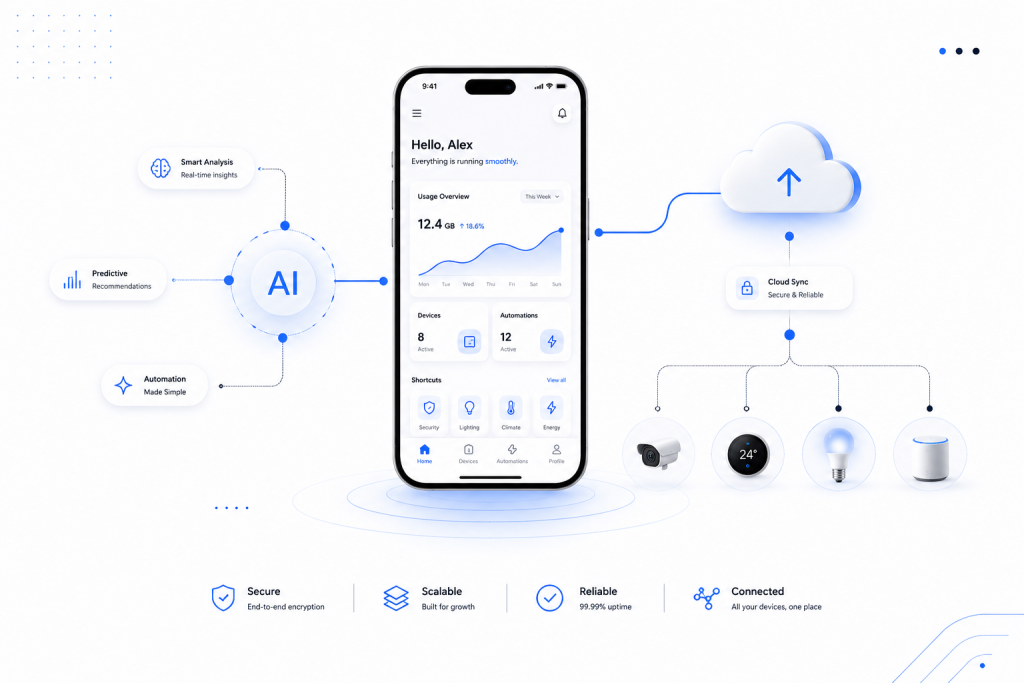
Mobile application development is evolving rapidly because businesses are no longer building apps only for digital presence. Instead, organizations now expect mobile platforms to deliver intelligent experiences, automate interactions, and support long-term digital ecosystems. As consumer behavior continues shifting toward mobile-first engagement, development priorities are also changing across industries.
Moreover, artificial intelligence, cloud infrastructure, and real-time connectivity are reshaping how applications are designed and maintained. Consequently, businesses are investing in scalable architectures that improve adaptability without sacrificing user experience. While earlier mobile strategies focused mainly on functionality, modern solutions increasingly emphasize personalization, predictive engagement, and seamless integration. At the same time, industries exploring advanced digital transformation initiatives are using mobile ecosystems to support operational agility, data accessibility, and connected customer journeys more efficiently.
The Rapid Evolution of Mobile Application Development in 2026
Mobile application development in 2026 is becoming more intelligent, adaptive, and interconnected because user expectations continue rising across digital platforms. Previously, businesses focused mainly on interface design and basic responsiveness. However, modern applications now prioritize predictive functionality, cloud synchronization, behavioral analytics, and real-time personalization. As a result, development teams are redesigning mobile architectures to support continuous scalability and long-term flexibility.
Furthermore, businesses increasingly expect applications to integrate smoothly with enterprise systems, wearable devices, and AI-powered tools. Consequently, development strategies now involve broader ecosystem planning instead of isolated app creation. While performance remains essential, companies are also emphasizing sustainability, security, and faster deployment cycles. In parallel, organizations investing in custom software development solutions are aligning mobile infrastructure with evolving operational goals, which allows faster innovation and more connected digital experiences.
Consumer Expectations Are Becoming More Demanding
Modern users expect mobile experiences to be highly responsive, personalized, and context-aware because digital convenience now strongly influences customer loyalty. Additionally, users increasingly abandon applications that feel slow, repetitive, or disconnected from their preferences. Therefore, businesses are redesigning mobile application development strategies around behavioral intelligence, faster loading speeds, and intuitive interactions.
At the same time, expectations for accessibility and seamless navigation are also increasing across industries. While customers previously tolerated fragmented experiences, they now demand consistency across smartphones, tablets, wearables, and web platforms. Consequently, development teams are investing more heavily in interface optimization, predictive engagement, and usability testing. Businesses prioritizing quality assurance and testing processes are therefore reducing friction while improving long-term customer retention and application reliability simultaneously.
Businesses Are Investing in Mobile-First Digital Ecosystems
Businesses are increasingly shifting toward mobile-first ecosystems because smartphones now influence communication, commerce, customer support, and operational workflows simultaneously. As mobile interactions continue dominating digital engagement, organizations are restructuring services around connected application environments instead of standalone tools. Consequently, mobile application development now plays a central role in broader digital infrastructure planning.
Moreover, cloud-native systems, AI-powered analytics, and API-driven architectures are allowing companies to unify mobile experiences more effectively. While startups focus on scalability and rapid deployment, enterprises are emphasizing integration with legacy systems and operational platforms. Therefore, businesses are investing in flexible development strategies that support long-term expansion without creating fragmented user experiences. Companies exploring advanced product engineering frameworks are also improving collaboration between development teams, operational systems, and evolving customer-facing technologies more efficiently.
AI-Powered Mobile Application Development Is Becoming the Standard
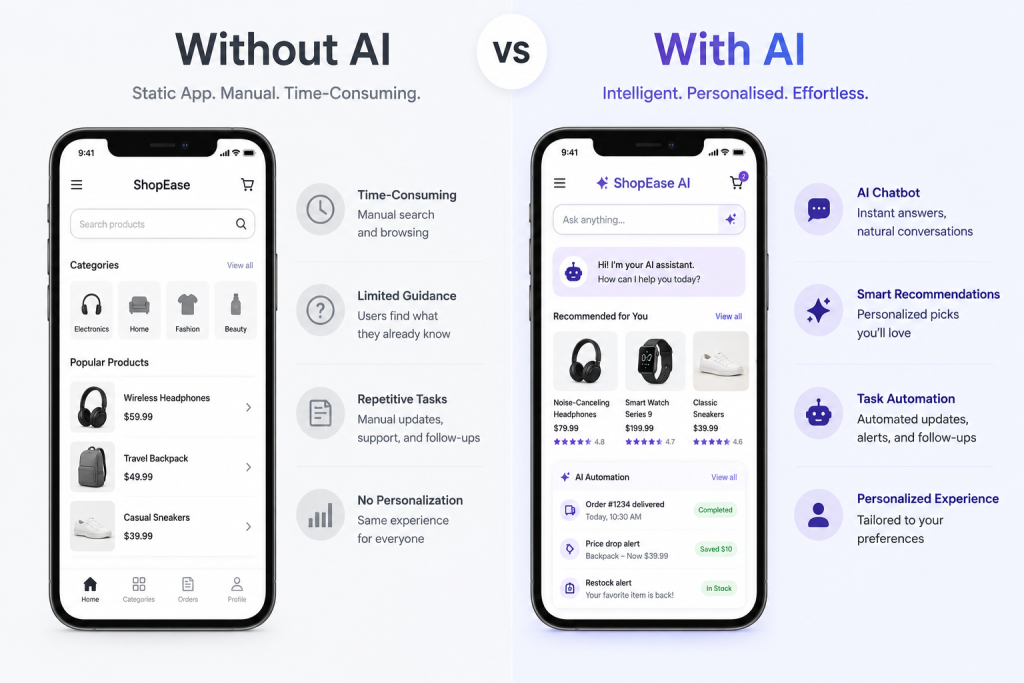
Artificial intelligence is rapidly transforming mobile application development because businesses now require applications that continuously learn, adapt, and improve user interactions. Previously, AI features were treated as optional enhancements. However, intelligent automation, predictive recommendations, and conversational interfaces are increasingly becoming core components of modern applications. As a result, organizations are integrating AI earlier within development lifecycles rather than adding it later.
Additionally, AI-powered applications are improving decision-making through behavioral insights and real-time analytics. Consequently, industries such as healthcare, fintech, ecommerce, and SaaS are adopting smarter engagement models that reduce manual processes and increase personalization. While automation improves operational efficiency, AI also strengthens customer retention by delivering more relevant digital experiences. Businesses investing in advanced mobile app development strategies are therefore prioritizing intelligent functionality alongside scalability, performance, and long-term adaptability.
Predictive User Experiences Are Redefining Engagement
Predictive experiences are becoming central to mobile application development because users increasingly expect applications to anticipate their preferences and behaviors automatically. Instead of relying only on manual interaction, modern platforms now analyze browsing patterns, purchase history, location data, and engagement signals to deliver smarter recommendations. Consequently, applications are becoming more proactive rather than purely reactive.
Furthermore, predictive systems are helping businesses improve retention, reduce friction, and increase user satisfaction simultaneously. While streaming platforms personalize content suggestions, ecommerce applications optimize purchasing journeys through behavioral forecasting. Therefore, predictive intelligence is influencing both customer engagement and operational decision-making across industries. Businesses combining AI analytics with advanced web development ecosystems are also creating more connected user journeys that adapt dynamically across mobile and browser-based platforms.
Conversational Interfaces Are Replacing Traditional Navigation
Conversational interfaces are increasingly replacing traditional menus because users now prefer faster and more natural digital interactions. As voice assistants, AI chatbots, and natural language processing technologies continue advancing, mobile application development is gradually shifting toward conversation-driven experiences. Consequently, businesses are simplifying navigation while reducing dependency on complex interface structures.
In addition, conversational systems are improving accessibility for users who struggle with conventional mobile navigation patterns. While earlier chatbot systems often delivered limited responses, modern AI-powered interfaces now support contextual conversations, multilingual communication, and real-time assistance. Therefore, industries such as healthcare, ecommerce, and banking are adopting conversational technologies to improve efficiency and engagement. Businesses implementing intelligent conversational systems are also reducing support workload while enhancing personalization across customer-facing mobile experiences.
Cross-Platform Mobile Application Development Is Accelerating Innovation
Cross-platform mobile application development is rapidly gaining momentum because businesses increasingly need faster deployment, broader device compatibility, and lower maintenance costs. Previously, organizations often maintained separate Android and iOS codebases, which increased complexity and delayed updates. However, modern frameworks now allow development teams to build unified applications without significantly compromising performance or user experience.
Furthermore, companies are prioritizing development efficiency as competition across digital markets intensifies. Consequently, startups and enterprises alike are investing in scalable frameworks that support rapid iteration and easier feature expansion. While native development still offers advantages for specialized applications, cross-platform ecosystems continue improving in responsiveness and flexibility. Businesses adopting advanced mobile app development strategies are therefore using unified development environments to streamline operations while maintaining consistent digital experiences across multiple platforms simultaneously.
Flutter and React Native Continue Dominating the Market
Flutter and React Native continue shaping mobile application development because both frameworks significantly reduce development overhead while supporting near-native performance. As businesses increasingly demand shorter release cycles, developers are favoring frameworks that simplify maintenance without sacrificing interface quality. Consequently, these technologies are becoming central to modern cross-platform strategies across startups, SaaS platforms, and enterprise ecosystems.
Additionally, both frameworks support reusable components, flexible integrations, and efficient testing environments, which improves long-term scalability. While Flutter is often praised for interface consistency, React Native remains popular because of its strong community support and integration flexibility. Therefore, organizations are evaluating frameworks based on project complexity, scalability requirements, and operational goals. As cross-platform capabilities mature further, businesses are increasingly prioritizing agile deployment models that accelerate product innovation while reducing infrastructure fragmentation across digital platforms.
Faster Deployment Cycles Are Becoming a Competitive Advantage
Businesses increasingly view faster deployment as a strategic advantage because digital markets evolve more rapidly than before. As customer expectations shift continuously, mobile application development teams must release updates, features, and fixes without disrupting user experience. Consequently, organizations are restructuring workflows around continuous integration, automated testing, and modular development systems.
Moreover, shorter deployment cycles help businesses respond more effectively to changing market conditions and user behavior. While lengthy development timelines previously slowed innovation, modern deployment practices now support faster experimentation and feature validation. Therefore, companies adopting agile delivery strategies are improving adaptability while minimizing operational delays. Key advantages of faster deployment cycles include:
- Reduced time-to-market
- Faster customer feedback integration
- Improved feature scalability
- Better competitive responsiveness
As a result, deployment speed is becoming closely linked with long-term digital growth and customer retention.
5G Connectivity Is Unlocking Real-Time Mobile Experiences
5G connectivity is transforming mobile application development because modern applications increasingly rely on real-time communication, low latency, and high-speed data processing. While earlier mobile networks supported basic connectivity requirements, newer technologies are enabling significantly richer digital experiences. Consequently, industries such as gaming, healthcare, logistics, and media are redesigning mobile ecosystems around faster and more stable communication infrastructure.
In addition, businesses are using 5G-enabled systems to support immersive technologies, cloud synchronization, and connected devices more efficiently. As network capabilities continue expanding globally, developers are building applications that process larger datasets with minimal delay. Therefore, organizations are preparing for real-time digital ecosystems that depend on continuous connectivity and instant responsiveness. Companies integrating web development and mobile infrastructures are also improving synchronization between browser-based platforms and high-performance mobile experiences across distributed environments.
Real-Time Streaming and Cloud Gaming Are Expanding
Real-time streaming and cloud gaming are expanding rapidly because 5G infrastructure now supports higher bandwidth and significantly lower latency. Previously, many mobile applications struggled to deliver uninterrupted high-definition experiences because network limitations created buffering and synchronization issues. However, faster mobile networks are allowing developers to build more immersive and responsive platforms across entertainment and collaboration sectors.
Furthermore, cloud gaming services are reducing dependency on high-end hardware by processing workloads remotely rather than locally. Consequently, users can access advanced gaming environments directly through smartphones and tablets without requiring expensive devices. While gaming remains a major growth area, industries such as education, telemedicine, and virtual collaboration are also benefiting from real-time mobile communication. Therefore, businesses are increasingly investing in high-performance streaming ecosystems that improve engagement, responsiveness, and accessibility simultaneously.
Edge Computing Is Reducing Mobile App Latency
Edge computing is becoming increasingly important because mobile application development now depends heavily on faster data processing and lower response times. Instead of transferring all information to centralized cloud servers, edge systems process data closer to the user location. Consequently, applications can respond more quickly while reducing network congestion and operational delays.
Moreover, industries requiring real-time decision-making are benefiting significantly from edge-based infrastructures. While healthcare applications use edge computing for faster diagnostics, logistics platforms rely on it for live tracking and operational monitoring. Therefore, businesses are integrating edge technologies to improve responsiveness, reliability, and scalability across distributed environments. Important benefits of edge computing include:
- Lower latency
- Faster real-time analytics
- Reduced bandwidth dependency
- Improved application stability
As mobile ecosystems continue expanding, edge infrastructure will increasingly support high-speed intelligent application environments.
IoT Integration Is Expanding the Role of Mobile Applications
IoT integration is expanding the scope of mobile application development because connected devices are increasingly shaping how businesses manage operations, customer experiences, and real-time monitoring systems. Previously, mobile applications mainly supported communication and transactional activities. However, modern applications now function as control hubs for smart ecosystems that connect sensors, wearables, industrial devices, and cloud infrastructure simultaneously.
Additionally, industries are investing heavily in connected technologies to improve automation, operational visibility, and predictive maintenance capabilities. Consequently, mobile platforms are becoming essential for monitoring distributed environments and analyzing live data streams efficiently. While consumer-focused IoT remains important, enterprise adoption is growing rapidly across healthcare, manufacturing, logistics, and retail sectors. Businesses implementing scalable product engineering frameworks are therefore integrating mobile ecosystems with intelligent device networks to improve adaptability, operational efficiency, and long-term infrastructure management more effectively.
Smart Ecosystems Are Driving Enterprise Innovation
Smart ecosystems are driving enterprise innovation because organizations increasingly depend on connected technologies to improve coordination, automation, and operational intelligence. As IoT adoption continues growing, mobile application development is evolving toward systems capable of managing thousands of interconnected devices simultaneously. Consequently, businesses are redesigning workflows around real-time monitoring and predictive operational models.
Furthermore, connected ecosystems are improving decision-making across industries where efficiency and responsiveness directly influence performance. While healthcare organizations monitor patients remotely, manufacturing companies track equipment conditions continuously to reduce downtime risks. Therefore, enterprises are investing in intelligent operational ecosystems that improve scalability while strengthening process visibility. As mobile technologies integrate more deeply with connected infrastructure, businesses are creating more adaptive digital environments capable of supporting long-term innovation and operational resilience.
Security and Device Management Are Becoming Critical
As connected ecosystems continue expanding, security challenges within mobile application development are becoming increasingly complex and difficult to ignore. Previously, businesses focused mainly on application-level security. However, IoT environments now involve multiple devices, communication channels, and cloud integrations, which significantly increases exposure to cybersecurity threats and unauthorized access risks.
In addition, device management is becoming more demanding because organizations must maintain software consistency, authentication controls, and real-time monitoring across distributed systems. Consequently, businesses are implementing stronger governance frameworks to protect sensitive operational and customer data. While convenience remains important, enterprises are prioritizing secure device orchestration, encryption standards, and continuous verification systems to minimize vulnerabilities. Therefore, modern IoT ecosystems increasingly depend on security-focused development strategies that balance operational efficiency with long-term digital trust and infrastructure stability.
AR and Immersive Experiences Are Transforming User Interaction
AR technologies are reshaping mobile application development because businesses increasingly want users to interact with digital environments in more engaging and realistic ways. Previously, augmented reality was associated mainly with gaming and entertainment applications. However, industries such as retail, healthcare, education, and real estate are now integrating immersive technologies to improve decision-making and customer interaction simultaneously.
Moreover, AR-driven experiences are reducing friction between physical and digital engagement by allowing users to visualize products, environments, and services before making decisions. Consequently, businesses are focusing more heavily on interactive digital experiences that strengthen engagement and reduce uncertainty during customer journeys. While adoption rates still vary across industries, immersive ecosystems are gradually becoming part of mainstream mobile strategies. Therefore, companies investing in future-ready mobile platforms are increasingly exploring AR capabilities to improve personalization, engagement quality, and long-term customer interaction outcomes.
Retail and Ecommerce Are Leading AR Adoption
Retail and ecommerce companies are rapidly adopting AR technologies because consumers increasingly expect more interactive shopping experiences across mobile platforms. Instead of relying solely on static product images, businesses now allow users to preview furniture, clothing, cosmetics, and accessories within real-world environments. Consequently, mobile application development strategies are becoming more focused on immersive visualization and real-time customer interaction.
Additionally, AR experiences are helping businesses reduce uncertainty during purchasing decisions while improving user confidence and engagement. While traditional ecommerce often struggled with product visualization limitations, immersive technologies now create more realistic buying experiences directly through smartphones. Therefore, retailers are integrating virtual try-ons, interactive previews, and spatial visualization systems to improve conversion rates and customer satisfaction. As user expectations continue evolving, AR-powered commerce experiences are becoming increasingly valuable for brands seeking stronger digital differentiation.
Training and Visualization Tools Are Becoming More Interactive
Businesses are increasingly using immersive technologies for training and visualization because interactive learning environments often improve knowledge retention and operational accuracy. As mobile application development continues evolving, organizations are replacing static instructional systems with more dynamic and experience-driven training models. Consequently, employees can interact with simulated environments that replicate real operational conditions more effectively.
Furthermore, industries such as healthcare, manufacturing, and logistics are adopting AR-powered systems to support remote assistance, technical guidance, and procedural training. While traditional learning systems often lacked engagement, immersive tools now improve understanding through real-time interaction and contextual visualization. Therefore, companies are investing in experience-based learning environments that reduce operational errors and accelerate workforce adaptation. As immersive mobile ecosystems mature further, training systems are becoming increasingly personalized, scalable, and responsive across enterprise environments.
Mobile Application Security Is Becoming a Business Priority
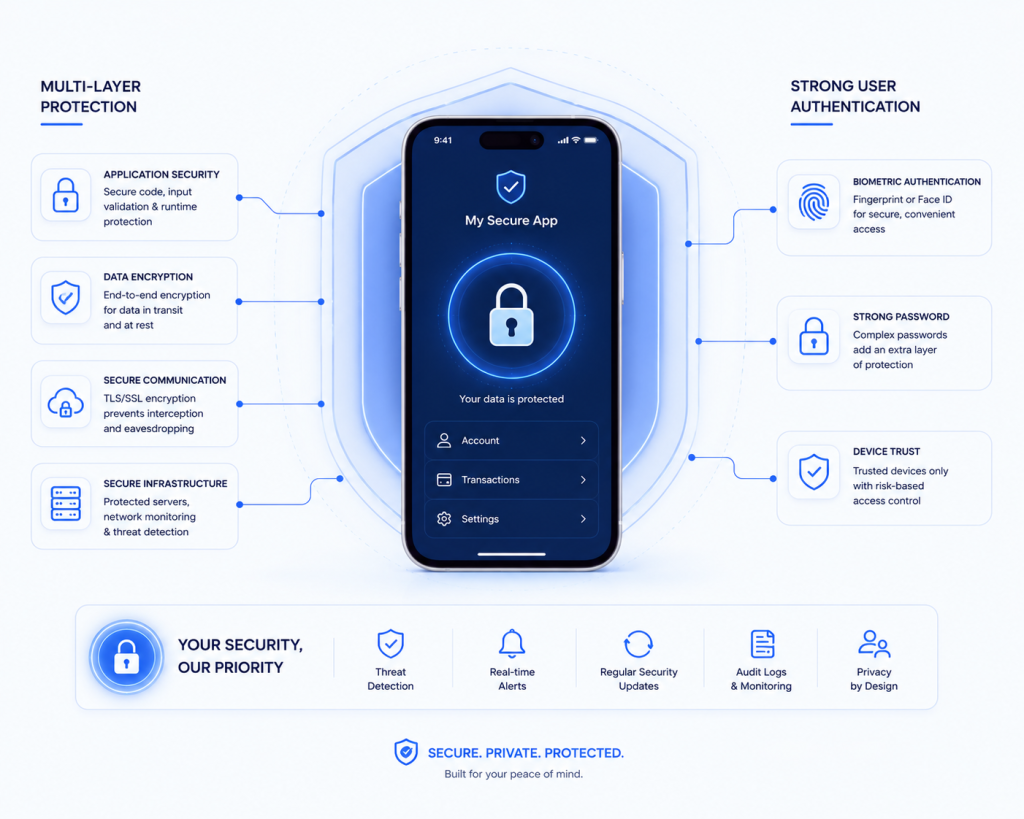
Security is becoming central to mobile application development because modern applications increasingly process sensitive financial, operational, and behavioral information. Previously, many businesses focused primarily on usability and feature expansion. However, growing cybersecurity threats and stricter compliance requirements are forcing organizations to prioritize data protection and infrastructure resilience much earlier within development lifecycles.
Additionally, mobile ecosystems are becoming more complex as applications integrate with cloud systems, APIs, IoT devices, and third-party services simultaneously. Consequently, organizations are implementing stronger authentication systems, encryption standards, and access controls to reduce exposure to evolving digital risks. While innovation remains important, businesses now recognize that security vulnerabilities can directly damage customer trust and operational continuity. Therefore, companies are embedding security-focused development strategies into every stage of application planning, deployment, and long-term maintenance processes.
Privacy Regulations Are Influencing App Architecture
Privacy regulations are increasingly influencing mobile application development because governments and regulatory authorities continue tightening data protection requirements globally. Previously, many applications collected extensive user information with limited transparency. However, businesses must now clearly explain how customer data is stored, processed, and shared across digital environments. Consequently, development teams are redesigning application architectures around stronger compliance and privacy governance models.
Moreover, regulations surrounding consent management, user tracking, and cross-border data transfers are becoming more complex each year. While businesses still rely heavily on analytics and behavioral insights, they must balance innovation with responsible data handling practices. Therefore, organizations are adopting privacy-first architectures that minimize unnecessary data collection while improving transparency and user control. As privacy expectations continue rising, compliance-focused development strategies are becoming essential for long-term digital sustainability and customer trust preservation.
Zero-Trust Security Models Are Gaining Momentum
Zero-trust security models are becoming more important because traditional perimeter-based security systems are no longer sufficient for modern mobile ecosystems. Instead of automatically trusting users or devices within a network, zero-trust frameworks continuously verify identities, permissions, and access behavior across every interaction. Consequently, mobile application development strategies are shifting toward more dynamic and layered security environments.
Furthermore, organizations operating distributed workforces and cloud-connected systems require stronger protection against unauthorized access and internal vulnerabilities. While conventional security methods often relied heavily on static credentials, zero-trust systems emphasize continuous verification, contextual authentication, and adaptive access management. Therefore, businesses are integrating advanced identity controls and behavioral monitoring systems to reduce risk exposure more effectively. As cyber threats continue evolving rapidly, zero-trust infrastructure is becoming increasingly critical for protecting connected mobile ecosystems and enterprise environments.
Low-Code and AI-Assisted Development Are Changing How Apps Are Built
Low-code platforms and AI-assisted systems are reshaping mobile application development because businesses increasingly require faster experimentation, reduced development complexity, and shorter deployment cycles. Previously, application development depended heavily on extensive manual coding and long production timelines. However, modern development ecosystems now support automated workflows, visual interfaces, and intelligent coding assistance that accelerate project delivery significantly.
Additionally, organizations are using AI-powered development tools to improve collaboration between technical and non-technical teams. Consequently, product managers, designers, and developers can participate more actively throughout application planning and optimization processes. While traditional development still remains essential for complex systems, low-code ecosystems are expanding rapidly across startups and enterprise environments. Therefore, businesses are adopting adaptive development workflows that improve flexibility, productivity, and innovation while reducing repetitive operational tasks across modern mobile ecosystems.
AI Coding Assistants Are Reducing Repetitive Tasks
AI coding assistants are becoming increasingly valuable because developers spend considerable time handling repetitive tasks such as debugging, testing, and documentation. Instead of manually managing every development activity, teams now use AI-powered systems to automate portions of coding workflows more efficiently. Consequently, mobile application development processes are becoming faster, more scalable, and less resource-intensive.
Moreover, intelligent coding systems are helping teams identify vulnerabilities, optimize performance, and improve code consistency during development cycles. While human expertise remains essential for architecture and strategic decisions, AI tools significantly reduce operational friction within routine engineering tasks. Therefore, organizations are integrating development automation systems to improve productivity without sacrificing quality standards. As AI-assisted ecosystems continue evolving, development teams are increasingly focusing more on innovation, user experience, and strategic product optimization rather than repetitive maintenance work.
Product Teams Are Collaborating More Efficiently
Modern product teams are collaborating more efficiently because low-code ecosystems and AI-assisted platforms simplify communication between technical and operational stakeholders. Previously, development workflows often created disconnects between designers, engineers, and business teams due to technical complexity and fragmented processes. However, visual development systems now improve alignment by making workflows more accessible and transparent across departments.
Additionally, collaborative development environments are reducing delays caused by miscommunication, documentation gaps, and isolated decision-making structures. While traditional software pipelines often required extensive handoffs between teams, modern ecosystems now support faster feedback cycles and iterative improvements. Therefore, organizations are prioritizing cross-functional collaboration models that encourage continuous refinement throughout product lifecycles. As mobile ecosystems become more dynamic, collaborative development frameworks are helping businesses adapt faster while maintaining stronger alignment between technical execution and business objectives.
Cloud-Native Mobile Application Development Is Reshaping Scalability
Cloud-native infrastructure is transforming mobile application development because businesses increasingly require applications that scale quickly without compromising performance or accessibility. Previously, many applications depended heavily on device-level storage and isolated backend systems. However, modern cloud-native ecosystems now support continuous synchronization, remote processing, and distributed scalability across multiple environments simultaneously.
Moreover, businesses are prioritizing operational flexibility because customer demand and digital workloads often fluctuate unpredictably. Consequently, development teams are adopting microservices, containerized architectures, and cloud-based deployment pipelines to improve resilience and performance consistency. While traditional infrastructures often created scaling limitations, cloud-native systems now support faster expansion and easier maintenance across complex digital ecosystems. Therefore, organizations are restructuring mobile strategies around cloud-driven architectures that improve adaptability, reduce downtime risks, and strengthen long-term infrastructure efficiency across evolving business environments.
Real-Time Synchronization Is Improving User Continuity
Real-time synchronization is becoming increasingly essential because users now expect seamless experiences across devices, platforms, and digital touchpoints. Instead of manually updating information between systems, modern mobile application development environments automatically synchronize user activity, preferences, and operational data in real time. Consequently, applications are delivering more connected and uninterrupted digital experiences across distributed ecosystems.
Furthermore, synchronized infrastructures are improving collaboration, workflow visibility, and accessibility across industries. While earlier applications often struggled with inconsistent data updates, cloud-native systems now maintain stronger continuity between mobile platforms, backend services, and browser-based environments. Therefore, businesses are investing more heavily in live synchronization frameworks that reduce friction and improve responsiveness. As remote collaboration and connected ecosystems continue expanding, real-time synchronization is becoming increasingly critical for maintaining consistent and reliable user experiences.
Cloud-Based Architectures Are Reducing Operational Complexity
Cloud-based architectures are reducing operational complexity because businesses increasingly need flexible infrastructures that simplify deployment, maintenance, and system expansion. Previously, organizations often managed fragmented environments with isolated servers and limited scalability. However, modern cloud ecosystems now support centralized management, automated updates, and more efficient resource allocation across digital platforms.
Additionally, cloud-native systems improve resilience by distributing workloads across multiple environments instead of relying on single infrastructure points. While traditional systems often required expensive maintenance and manual configuration, cloud platforms now support more adaptive and cost-efficient operational models. Therefore, businesses are adopting distributed infrastructure strategies that improve reliability while minimizing operational bottlenecks. As mobile ecosystems become increasingly interconnected, cloud-based architectures are helping organizations maintain stronger performance consistency and faster system adaptability across changing digital demands.
Voice User Interfaces Are Redefining Mobile Interaction
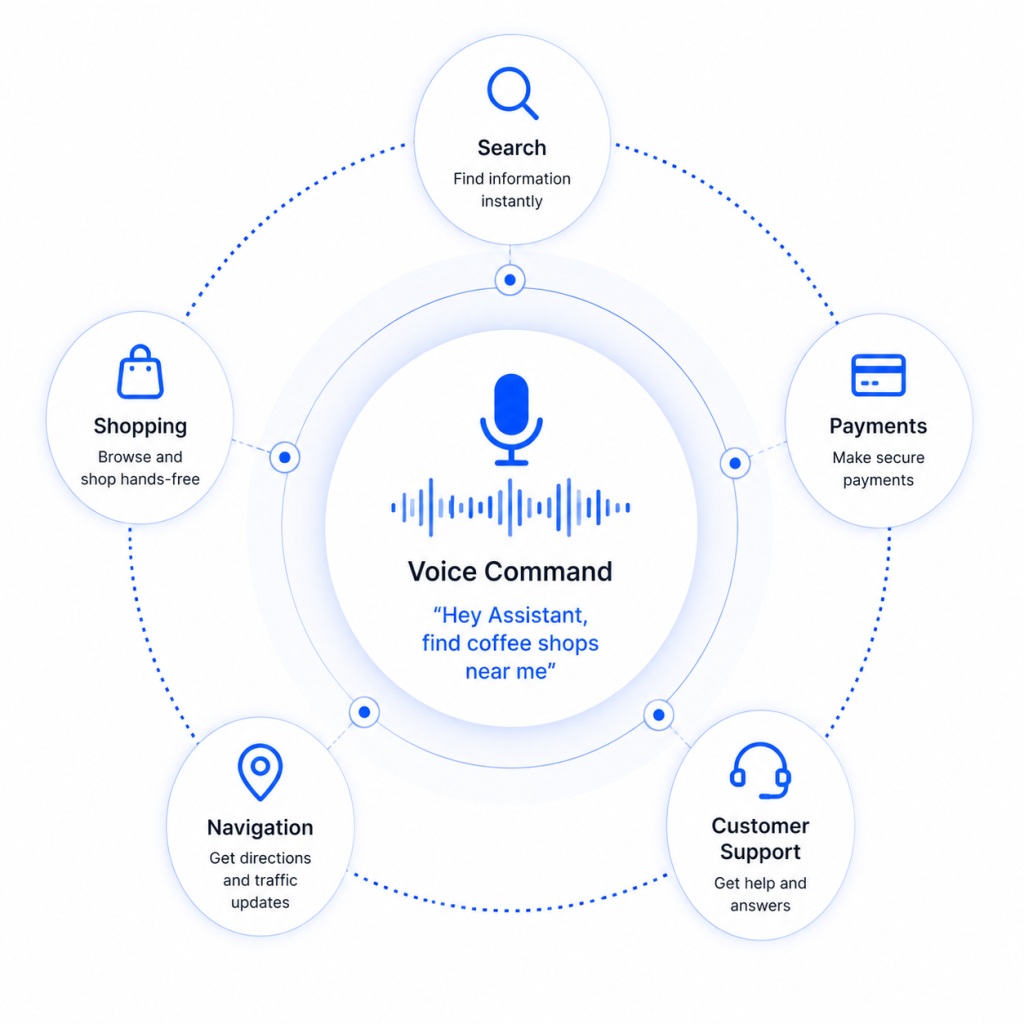
Voice technologies are reshaping mobile application development because users increasingly prefer faster and more intuitive interaction methods across digital platforms. Instead of relying entirely on touch-based navigation, many applications now integrate voice commands, conversational assistance, and speech recognition systems to simplify user experiences. Consequently, businesses are redesigning applications around more natural communication patterns and accessibility-focused interaction models.
Moreover, voice-enabled systems are improving efficiency across industries where speed and convenience strongly influence customer engagement. While earlier voice technologies often struggled with accuracy limitations, modern AI-powered systems now support contextual understanding, multilingual processing, and personalized responses. Therefore, organizations are investing in voice-driven interaction ecosystems that reduce navigation complexity while improving responsiveness and accessibility. As conversational technologies continue evolving rapidly, voice interfaces are becoming increasingly important for creating adaptive and user-centric mobile experiences across modern digital environments.
Voice Commerce Is Expanding Digital Transactions
Voice commerce is growing rapidly because consumers increasingly use voice assistants to search products, compare prices, and complete purchases more conveniently. Instead of manually browsing through multiple screens, users can now interact with digital platforms through conversational commands and real-time recommendations. Consequently, mobile application development strategies are evolving toward more streamlined and frictionless transaction experiences.
Furthermore, businesses are integrating voice technologies to improve accessibility and reduce complexity within ecommerce ecosystems. While traditional shopping experiences often depended heavily on visual navigation, conversational systems now simplify product discovery and purchasing decisions. Therefore, organizations are adopting voice-enabled commerce strategies that improve convenience while strengthening customer engagement. As voice recognition systems become more accurate and context-aware, voice commerce will continue influencing how businesses design future mobile purchasing environments and digital transaction models.
Accessibility Is Becoming a Core Development Priority
Accessibility is becoming increasingly important because mobile application development must now support diverse user needs across different physical, cognitive, and technological conditions. Previously, accessibility features were often treated as secondary enhancements. However, businesses now recognize that inclusive digital experiences directly influence usability, engagement, and long-term customer retention across global markets.
Additionally, modern accessibility standards are encouraging development teams to improve navigation clarity, voice compatibility, screen-reader functionality, and adaptive interface design. While earlier applications frequently overlooked accessibility optimization, current mobile ecosystems increasingly prioritize inclusive interaction models that support broader audiences more effectively. Therefore, organizations are implementing inclusive development principles that improve usability without compromising functionality or visual consistency. As digital accessibility expectations continue rising, accessible mobile ecosystems are becoming essential for sustainable and user-focused innovation strategies.
The Future of Mobile Application Development Will Focus on Intelligent Ecosystems
The future of mobile application development will increasingly revolve around intelligent ecosystems because modern applications are evolving beyond isolated tools into interconnected digital environments. Previously, businesses often focused on standalone app functionality and limited integrations. However, future-ready ecosystems now combine AI, cloud infrastructure, IoT, predictive analytics, and automation to create more adaptive and responsive digital experiences.
Moreover, businesses are prioritizing context-aware ecosystems that continuously adjust according to user behavior, operational conditions, and real-time data insights. Consequently, mobile platforms are becoming more proactive, scalable, and personalized across industries. While individual applications remain important, organizations are increasingly investing in connected infrastructures that unify multiple digital services within a single ecosystem. Therefore, intelligent ecosystems will continue shaping how businesses deliver engagement, automate workflows, and maintain long-term adaptability across rapidly evolving digital markets.
Hyper-Personalization Will Shape Future User Experiences
Hyper-personalization is becoming central to mobile application development because users increasingly expect applications to adapt dynamically according to their preferences, behaviors, and usage patterns. Instead of offering static experiences for broad audiences, modern platforms now analyze contextual information to deliver highly tailored interactions. Consequently, businesses are focusing more heavily on predictive engagement and individualized digital experiences.
Furthermore, personalization technologies are improving customer retention by reducing irrelevant interactions and increasing contextual relevance. While earlier systems relied mainly on basic demographic segmentation, advanced AI ecosystems now process behavioral insights, browsing patterns, and real-time activity simultaneously. Therefore, businesses are implementing adaptive personalization frameworks that continuously optimize engagement across digital touchpoints. As intelligent ecosystems mature further, hyper-personalized mobile experiences will increasingly influence customer expectations, brand loyalty, and long-term user satisfaction across competitive digital environments.
Sustainable and Ethical Development Will Gain Attention
Sustainability and ethical technology practices are becoming more important because businesses increasingly recognize the broader social and environmental impact of digital ecosystems. Previously, development priorities focused mainly on performance and scalability. However, organizations are now considering energy efficiency, responsible AI usage, and transparent data practices within mobile application development strategies.
Additionally, ethical concerns surrounding automation, user privacy, and algorithmic decision-making are encouraging businesses to adopt more accountable development models. While rapid innovation remains essential, organizations must also balance technological advancement with long-term trust and responsible governance principles. Therefore, companies are investing in ethical digital frameworks that prioritize transparency, inclusivity, and sustainable infrastructure management. As regulatory scrutiny and consumer awareness continue growing, responsible development practices will increasingly shape the future direction of intelligent mobile ecosystems.
Blockchain Technologies Are Strengthening Trust in Mobile Ecosystems
Blockchain technologies are increasingly influencing mobile application development because businesses now require stronger transparency, decentralized security, and tamper-resistant transaction systems. Previously, blockchain adoption was associated mainly with cryptocurrency platforms. However, industries such as finance, healthcare, logistics, and ecommerce are now integrating decentralized systems to improve trust and data integrity across digital environments.
Moreover, blockchain infrastructure is helping businesses reduce dependency on centralized verification systems while improving traceability within complex operational networks. Consequently, organizations are exploring secure decentralized ecosystems that strengthen authentication, transaction visibility, and digital ownership management. While large-scale blockchain adoption still faces scalability challenges, mobile ecosystems continue evolving toward more secure and transparent architectures. Therefore, blockchain technologies are gradually becoming an important component within future-ready mobile infrastructures and connected enterprise environments.
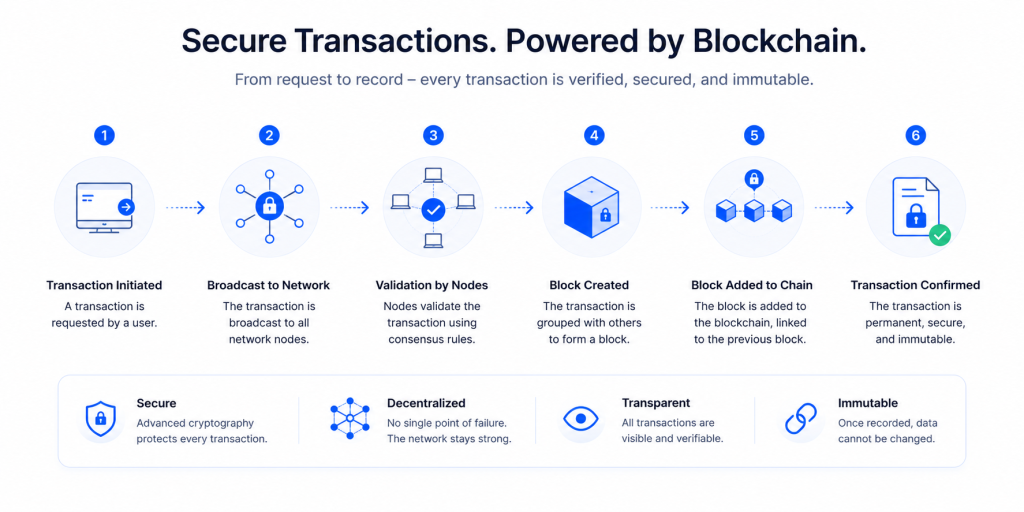
Decentralized Authentication Is Improving Digital Security
Decentralized authentication models are gaining attention because traditional password-based systems increasingly expose businesses and users to cybersecurity risks. Instead of storing sensitive credentials within centralized databases, blockchain-powered systems distribute identity verification across encrypted digital networks. Consequently, mobile application development strategies are becoming more focused on reducing identity-related vulnerabilities and unauthorized access threats.
Furthermore, decentralized identity systems improve user control by allowing individuals to manage credentials without relying entirely on third-party platforms. While conventional authentication often creates single points of failure, distributed verification models strengthen resilience against large-scale security breaches. Therefore, organizations are adopting identity-centric security frameworks that improve trust while minimizing credential exposure risks. As digital ecosystems continue expanding, decentralized authentication will likely become increasingly important for protecting connected mobile environments and sensitive enterprise systems.
Smart Contracts Are Automating Digital Transactions
Smart contracts are transforming digital operations because they automatically execute predefined actions once specific conditions are fulfilled. Instead of relying heavily on manual approvals or intermediaries, businesses now use blockchain-powered contracts to streamline transactions and reduce operational delays. Consequently, mobile application development is evolving toward more automated and self-regulating digital workflows across multiple industries.
Additionally, smart contracts improve transaction transparency by recording activities within immutable blockchain systems that reduce manipulation risks. While earlier digital agreements often depended on fragmented approval structures, automated contract systems now support faster execution and improved accountability. Therefore, organizations are implementing automated transactional ecosystems that simplify financial processes, operational coordination, and digital verification activities simultaneously. As blockchain technologies mature further, smart contracts will continue influencing the future structure of secure mobile business operations.
Wearable Technology Is Expanding Mobile Application Development Beyond Smartphones
Wearable technologies are reshaping mobile application development because users increasingly interact with digital services through smartwatches, fitness trackers, and connected health devices. Previously, smartphones dominated most mobile interactions. However, wearable ecosystems are now creating additional digital touchpoints that require seamless synchronization, responsive interfaces, and continuous data exchange across connected environments.
Moreover, businesses are using wearable technologies to improve real-time monitoring, personalized experiences, and contextual engagement across industries. Consequently, mobile applications are becoming more adaptive and data-driven while supporting multi-device interaction models. While consumer health tracking remains a major use case, industries such as healthcare, logistics, and workforce management are also expanding wearable adoption rapidly. Therefore, organizations are prioritizing device-integrated ecosystems that improve accessibility, operational visibility, and personalized digital experiences beyond traditional smartphone interfaces.
Healthcare Wearables Are Driving Real-Time Monitoring
Healthcare wearables are becoming increasingly important because patients and medical providers now depend heavily on continuous health monitoring and remote care systems. Instead of relying solely on periodic clinical assessments, wearable devices now collect real-time health metrics such as heart rate, activity levels, and sleep patterns continuously. Consequently, mobile application development strategies are evolving toward more proactive and preventive healthcare ecosystems.
Furthermore, healthcare organizations are using wearable technologies to improve patient engagement, chronic condition monitoring, and treatment adherence. While earlier monitoring systems often required in-person supervision, connected health ecosystems now support remote accessibility and faster medical response capabilities. Therefore, businesses are investing in real-time healthcare intelligence systems that improve medical visibility and patient support simultaneously. As digital healthcare adoption continues growing, wearable-integrated mobile ecosystems will increasingly shape modern healthcare infrastructure and service delivery models.
Context-Aware Experiences Are Enhancing Personalization
Context-aware systems are enhancing personalization because wearable technologies continuously collect behavioral and environmental information in real time. Instead of delivering generic digital experiences, modern mobile application development environments now adapt interactions according to activity levels, location, movement patterns, and user preferences. Consequently, applications are becoming more responsive and individualized across connected ecosystems.
Additionally, contextual intelligence improves engagement by allowing applications to deliver timely notifications, recommendations, and automated responses based on real-world conditions. While traditional personalization relied heavily on static user profiles, wearable ecosystems now support more dynamic interaction models driven by live behavioral insights. Therefore, businesses are implementing adaptive personalization frameworks that improve relevance and user satisfaction simultaneously. As wearable technologies become more sophisticated, context-aware mobile experiences will increasingly define future engagement strategies across digital platforms.
Mobile Commerce Is Evolving Into a Frictionless Digital Experience
Mobile commerce is rapidly evolving because consumers increasingly expect faster, more seamless, and highly personalized purchasing experiences across digital platforms. Previously, ecommerce ecosystems often involved lengthy checkout processes and disconnected payment systems. However, modern mobile application development strategies now prioritize simplified transactions, predictive recommendations, and integrated financial technologies that reduce purchasing friction significantly.
Furthermore, businesses are redesigning mobile commerce ecosystems around convenience, accessibility, and real-time customer engagement. Consequently, digital wallets, biometric authentication, and AI-powered recommendation systems are becoming standard features within modern shopping environments. While traditional ecommerce focused mainly on product availability, modern mobile commerce now emphasizes experience-driven transactions that improve speed, personalization, and customer retention. Therefore, businesses are increasingly investing in intelligent commerce ecosystems that create smoother and more adaptive purchasing journeys across mobile platforms.
Digital Wallets Are Simplifying Consumer Transactions
Digital wallets are transforming mobile commerce because consumers increasingly prefer secure and faster payment methods that eliminate repetitive transaction steps. Instead of manually entering payment information for every purchase, users can now complete transactions instantly through integrated mobile payment systems. Consequently, mobile application development ecosystems are becoming more focused on convenience, transaction speed, and financial accessibility.
Moreover, digital wallet adoption is improving customer trust by supporting encrypted transactions, biometric authentication, and multi-layer verification systems. While traditional payment systems often created delays and checkout abandonment risks, integrated wallets now simplify purchasing across ecommerce, transportation, and subscription platforms. Therefore, businesses are implementing streamlined payment ecosystems that reduce friction while improving conversion rates and customer satisfaction simultaneously. As mobile payment technologies continue expanding globally, digital wallets will increasingly shape the future direction of digital commerce environments.
AI-Driven Recommendations Are Influencing Purchasing Behavior
AI-driven recommendation systems are becoming increasingly influential because consumers now expect shopping experiences tailored to their preferences and behavioral patterns. Instead of displaying generic product catalogs, modern mobile application development systems analyze browsing history, engagement behavior, and transaction patterns to deliver more relevant product suggestions. Consequently, businesses are improving personalization while strengthening customer engagement and retention.
Additionally, recommendation engines are helping organizations optimize marketing strategies and purchasing journeys simultaneously. While traditional ecommerce systems often relied on broad segmentation methods, AI-powered platforms now generate more accurate insights through predictive behavioral analysis. Therefore, businesses are adopting intelligent recommendation ecosystems that improve product discovery and increase purchasing efficiency across digital platforms. As personalization technologies continue advancing rapidly, AI-driven commerce experiences will increasingly influence how consumers interact with mobile marketplaces and connected retail ecosystems.
Conclusion: Businesses Must Prepare for the Next Phase of Mobile Innovation
Mobile application development is entering a transformative phase because intelligent technologies, connected ecosystems, and evolving customer expectations are redefining how digital experiences are created and delivered. Previously, businesses focused mainly on usability and feature expansion. However, modern mobile ecosystems now demand adaptability, personalization, security, and real-time responsiveness across increasingly complex digital environments.
Moreover, technologies such as AI, IoT, blockchain, cloud-native infrastructure, and immersive experiences are reshaping long-term development priorities across industries. Consequently, organizations that invest early in scalable and future-ready ecosystems will likely adapt more effectively to changing market conditions and customer behavior. While innovation continues accelerating rapidly, businesses must also prioritize ethical development, accessibility, and sustainable digital practices. Therefore, companies that approach mobile application development strategically will be better positioned to improve engagement, strengthen operational resilience, and maintain long-term competitive relevance in 2026 and beyond.
Frequently Asked Questions (FAQs)
1. What is driving the future of mobile application development?
The future of mobile application development is mainly driven by AI integration, cloud-native infrastructure, IoT ecosystems, and evolving customer expectations. Businesses now require smarter and more adaptive digital experiences. Additionally, faster connectivity and automation technologies are accelerating innovation across industries. Consequently, mobile ecosystems are becoming more intelligent, scalable, and personalized.
2. Why is AI becoming essential in mobile application development?
AI is improving mobile application development by enabling predictive analytics, intelligent automation, and personalized user experiences. Instead of relying only on static functionality, applications can now adapt according to user behavior and preferences. Furthermore, conversational interfaces and AI assistants are simplifying interactions significantly. Therefore, businesses are increasingly prioritizing AI-powered mobile ecosystems.
3. How does 5G impact modern mobile applications?
5G improves mobile application development by enabling lower latency, faster connectivity, and real-time digital experiences. As a result, industries can support cloud gaming, immersive AR systems, and live collaboration more efficiently. Additionally, applications process larger data volumes without major performance limitations. Consequently, businesses are building richer and more responsive mobile ecosystems.
4. Why is security important in mobile application development?
Security is critical because modern mobile applications handle sensitive customer, operational, and financial information continuously. As cyber threats become more advanced, businesses must implement strong authentication, encryption, and privacy-focused infrastructures. Moreover, connected ecosystems and IoT integrations increase potential vulnerabilities significantly. Therefore, secure development practices are essential for maintaining digital trust and operational stability.
5. How can businesses prepare for future mobile technology trends?
Businesses should prepare by investing in scalable infrastructure, intelligent automation, and adaptive mobile ecosystems. Additionally, organizations must focus on accessibility, cybersecurity, and continuous innovation to remain competitive. While emerging technologies evolve rapidly, flexible development strategies improve long-term adaptability and resilience. Consequently, early preparation helps businesses respond more effectively to changing digital expectations.