

Why Offshore PHP Development Is Redefining Business Growth in 2025
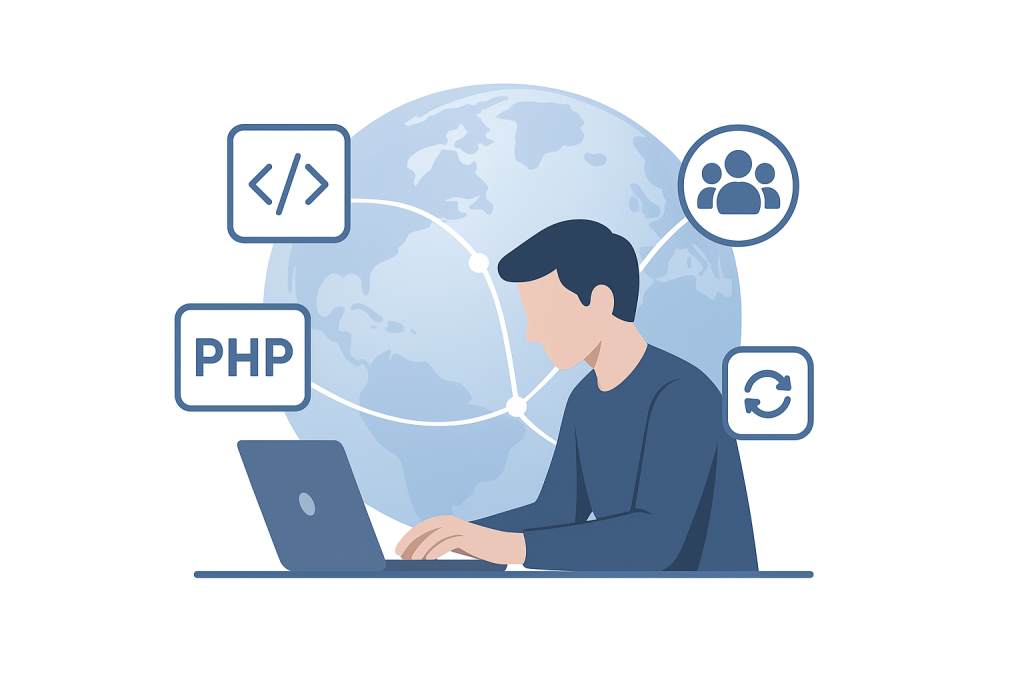
In 2025, offshore PHP development is reshaping how modern businesses innovate, collaborate, and scale across global markets. Companies are moving beyond traditional outsourcing toward strategic partnerships that encourage agility, speed, and continuous innovation. This shift enables enterprises to access world-class developers, streamline delivery, and maintain operational efficiency without location barriers.
Moreover, the flexibility of offshore PHP teams allows organizations to adapt quickly to changing project demands and emerging technologies. Businesses can now deploy robust, scalable web solutions faster while optimizing overall budgets. Many integrate custom web application development and cloud-driven architecture to enhance performance and reliability.
As competition intensifies, this collaborative development model empowers companies to reduce risks, boost innovation, and build stronger digital ecosystems. By leveraging offshore PHP development, businesses set themselves up for sustainable global growth and long-term digital success.
Understanding Offshore PHP Development: The Foundation for Global Collaboration
Offshore PHP development has evolved from simple outsourcing into a strategic collaboration model that connects businesses with specialized global talent. As industries digitize rapidly, this approach allows enterprises to combine cost efficiency, technical innovation, and scalable delivery in one framework. Through seamless communication and structured processes, offshore teams now operate as trusted extensions of in-house staff.
Furthermore, by embracing this model, businesses can balance agility with quality. Offshore PHP teams contribute not just to development but also to long-term product planning and system optimization. Many companies strengthen their backend systems using enterprise software development to ensure consistency and performance across digital platforms.
What Offshore PHP Development Really Means
At its core, offshore PHP development represents a strategic alliance, not a short-term outsourcing fix. Businesses partner with offshore developers who share accountability, communicate openly, and drive results continuously. These teams operate across time zones but stay aligned through agile frameworks and project transparency. Consequently, companies experience faster product delivery, fewer errors, and improved technical execution — all while maintaining global reach.
How Offshore PHP Development Differs from Outsourcing
Unlike traditional outsourcing, offshore PHP development promotes integration and collaboration throughout the project lifecycle. While outsourcing often ends with delivery, offshore teams stay engaged from planning to maintenance. This ongoing involvement builds trust, consistency, and technical continuity. Additionally, shared communication platforms and clear sprint goals keep everyone aligned, ensuring greater efficiency and measurable outcomes.
Why PHP Is Still the Preferred Choice for Offshore Development
PHP continues to dominate because of its scalability, stability, and affordability. Offshore teams rely on PHP’s strong frameworks like Laravel, Symfony, and CodeIgniter to deliver high-performing web solutions. Moreover, its compatibility with modern databases and APIs supports complex enterprise needs. PHP’s flexibility allows offshore teams to innovate quickly, maintain reliability, and achieve faster time-to-market without added infrastructure costs.
Key Benefits of Offshore PHP Development for Modern Businesses
In 2025, offshore PHP development is redefining how modern enterprises grow and innovate. It allows companies to access skilled developers globally while maintaining flexibility and cost efficiency. Through agile collaboration and transparent communication, businesses gain faster delivery and improved project visibility.
Moreover, this approach helps organizations build scalable systems and respond quickly to changing market needs. Offshore teams bring specialized skills, diverse experience, and technical depth. Many companies enhance collaboration through dedicated PHP development services to maintain quality and consistency across long-term projects.
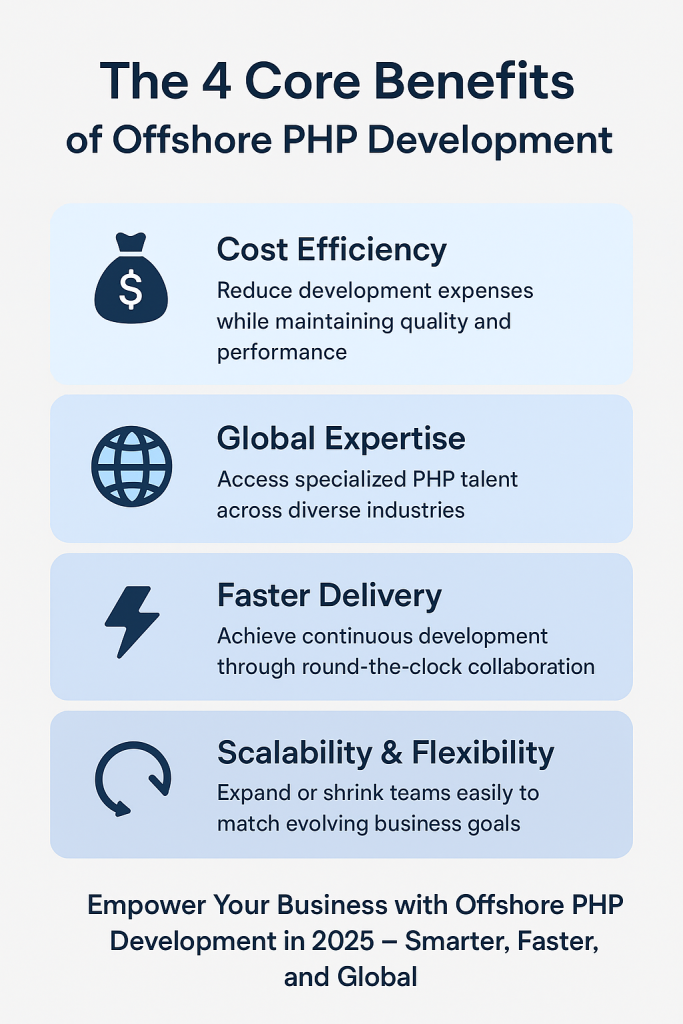
Cost Efficiency Without Sacrificing Quality
A major advantage of offshore PHP development is cost optimization. Offshore regions often provide expert developers at competitive rates without lowering standards.
- Lower development costs mean more budget for innovation.
- High skill levels ensure reliable code and secure systems.
- Agile methods guarantee faster feedback and issue resolution.
This balance of affordability and quality gives companies a long-term edge in efficiency and sustainability.
Access to Global Expertise and Specialized Skills
Through offshore PHP development, businesses gain access to diverse, skilled professionals with experience across frameworks and industries. These developers adapt quickly to project demands and bring unique problem-solving perspectives.
Additionally, global collaboration enhances creativity and innovation. Offshore teams combine technical knowledge with fresh market insights. As a result, companies create scalable and future-ready web solutions that stay ahead of competition.
Faster Development and Continuous Delivery
Speed remains one of the strongest benefits of offshore PHP development. With teams operating across time zones, development continues around the clock.
Furthermore, agile methods and automated testing shorten product cycles dramatically. Offshore collaboration helps companies deploy updates faster, improve responsiveness, and maintain ongoing progress. This model supports continuous delivery, ensuring products reach markets on time with consistent quality.
Scalability and Long-Term Flexibility
Offshore PHP development allows organizations to scale resources efficiently as projects evolve. Teams can expand during active phases and downsize during maintenance periods.
- No long-term hiring commitments
- Access to specialized PHP and QA experts
- Quick onboarding through shared documentation
This adaptability enables businesses to sustain productivity and manage multiple projects with confidence. Offshore PHP development thus ensures long-term stability and optimized performance in dynamic environments.
Choosing the Right Offshore PHP Development Model
Selecting the right offshore PHP development model determines how efficiently your project runs. Each approach defines the level of control, flexibility, and collaboration you can expect. By understanding these models, businesses can match project demands with operational capabilities.
Furthermore, choosing wisely helps improve delivery quality, cost management, and team alignment. The table below offers a clear comparison to help you decide which engagement style best fits your company’s needs.
| Model Type | Level of Control | Flexibility | Cost Structure | Best Suited For | Collaboration Style |
| Dedicated Team | High | Medium | Monthly / Long-Term | Ongoing or large-scale projects | Full-time integration with internal teams |
| Project-Based | Medium | Low | Fixed Per Project | Short-term or well-defined deliverables | Milestone-driven with clear goals |
| Staff Augmentation | Medium | High | Hourly / Contract-Based | Filling specific skill or resource gaps | Temporary integration with existing teams |
| Hybrid Model | High | Very High | Mixed (Project + Retainer) | Complex, multi-phase or scalable projects | Combines all models for maximum adaptability |
Dedicated Team Model: Deep Collaboration and Long-Term Control
The dedicated team model ensures a stable and continuous partnership between businesses and offshore PHP developers. These teams align closely with in-house objectives, sharing culture, tools, and communication practices.
Because collaboration is long-term, it builds stronger accountability and domain expertise. This model suits companies requiring ongoing support, complex development, or evolving projects over extended periods.
Project-Based Model: Clear Scope and Faster Delivery
The project-based model focuses on achieving specific results within a fixed scope, cost, and timeline. It’s perfect for organizations seeking short-term assistance without full-time commitments.
Every milestone and deliverable is pre-defined to ensure transparency and predictability. Moreover, this model promotes focused execution and fast turnaround, ideal for startups and MVP launches.
Staff Augmentation Model: Flexible Skill Scaling
With the staff augmentation model, companies can quickly scale teams by adding skilled offshore PHP developers. These professionals integrate smoothly with internal teams to meet tight deadlines or fill skill gaps.
This setup ensures flexibility, reduces hiring overhead, and maintains consistent output during growth phases. As a result, businesses gain immediate expertise while remaining adaptable to changing workloads.
Hybrid Model: Combining Strengths for Strategic Edge
The hybrid model blends the stability of dedicated teams with the agility of project-based or augmented setups. It allows enterprises to balance efficiency, cost, and innovation across projects.
Core functions can remain with permanent teams, while specialized tasks use temporary experts. Consequently, companies achieve greater adaptability, better productivity, and a sustainable growth rhythm.
Building a High-Performing Offshore PHP Development Team
A successful offshore PHP development team is built on trust, communication, and technical precision. The right structure ensures that every team member aligns with business objectives while maintaining productivity and innovation.
Moreover, clear goals, consistent feedback, and cultural alignment drive project efficiency. Companies that focus on transparency and skill synergy build teams that deliver superior performance. Let’s explore the key components that transform an offshore PHP team into a high-performing development powerhouse.
Defining Roles and Responsibilities Clearly
Defining clear roles and responsibilities prevents confusion and ensures smooth project execution. Each developer should understand their contribution, timelines, and accountability points.
- Project managers oversee progress and client coordination.
- Developers handle coding, testing, and optimization tasks.
- QA specialists ensure bug-free, reliable output.
When everyone understands their role, collaboration improves, and delivery becomes faster. Consequently, it minimizes miscommunication and enhances team cohesion.
Focusing on Communication and Collaboration
Strong communication frameworks are vital in offshore PHP development. Regular updates, sprint reviews, and virtual stand-ups keep teams synchronized despite distance.
Furthermore, open communication fosters trust and faster issue resolution. Using project management tools and shared dashboards improves visibility and transparency. Therefore, both in-house and offshore teams maintain continuous alignment and smooth workflow execution.
Prioritizing Technical Skills and Continuous Learning
Technical excellence defines the success of an offshore PHP development team. Businesses should recruit developers proficient in frameworks like Laravel, Symfony, and CodeIgniter.
Equally important, continuous learning ensures adaptability to new trends and technologies. Encouraging upskilling through workshops, online courses, or certifications keeps teams innovative and competitive. As a result, developers deliver robust, future-proof solutions.
Encouraging Cultural Compatibility and Team Spirit
Cultural understanding plays a major role in the success of offshore PHP development projects. Teams that share mutual respect and values collaborate more effectively and reduce friction.
Celebrating milestones, recognizing efforts, and promoting inclusivity build stronger morale. Additionally, this positive environment increases engagement and creativity, resulting in higher retention and consistent output quality.
Best Practices for Managing Offshore PHP Development Projects
Effective management is the foundation of successful offshore PHP development. Since teams work across locations, the process requires strong leadership and structured coordination. Clear communication, agile planning, and transparent feedback loops ensure seamless collaboration throughout each phase.
Moreover, setting measurable KPIs, maintaining regular updates, and using efficient tools enhances both visibility and control. The following best practices help businesses manage offshore PHP projects with confidence, clarity, and high performance — turning potential challenges into growth opportunities.
Set Clear Expectations and Realistic Goals
Every offshore PHP development project starts with defining achievable and measurable goals. Clarity in deliverables and timelines helps teams align with project vision.
- Create structured project roadmaps.
- Define performance metrics early.
- Ensure shared understanding of quality benchmarks.
This proactive approach minimizes misunderstandings and keeps progress steady. As a result, projects maintain direction and accountability from start to finish.
Implement Agile Methodologies for Flexibility
Agile frameworks are essential for managing offshore PHP development effectively. Through iterative planning and short sprints, teams remain adaptable to changes and new requirements.
Moreover, frequent feedback cycles ensure ongoing alignment between business goals and development progress. Agile also enables quick risk detection and faster delivery, maintaining momentum and responsiveness. Ultimately, it empowers teams to stay focused, flexible, and result-driven.
Use the Right Collaboration and Tracking Tools
Digital collaboration tools bridge the gap between in-house and offshore PHP teams. Platforms like Jira, Trello, and Asana streamline task management and progress tracking.
Additionally, shared dashboards provide transparency across all workstreams. Regular video calls and document repositories ensure that everyone stays informed. This structured system keeps communication consistent and prevents project delays caused by uncertainty.
Monitor Performance and Provide Constructive Feedback
Performance monitoring ensures quality consistency throughout offshore PHP development. Managers should review deliverables regularly and measure progress against KPIs.
Equally, providing timely and constructive feedback promotes continuous improvement. When developers feel guided and supported, productivity and morale rise. Therefore, consistent reviews help strengthen accountability and maintain project excellence.
Overcoming Challenges in Offshore PHP Development
Even though offshore PHP development offers major advantages, it comes with a few challenges that demand careful attention. Communication barriers, cultural differences, and time zone gaps can sometimes create delays or confusion.
However, with structured coordination and proactive engagement, these obstacles can become opportunities for stronger teamwork. By focusing on collaboration, accountability, and transparency, businesses can turn offshore partnerships into productive, well-aligned alliances that sustain long-term success.
Bridging Communication Gaps
Clear communication is the foundation of every effective offshore PHP development project. Without proper systems, even skilled teams can face misunderstandings or duplicate efforts.
To overcome this, companies should:
- Schedule regular video calls and weekly reports.
- Use shared dashboards for updates and deliverables.
- Encourage open feedback to maintain alignment.
When communication flows smoothly, it enhances trust, visibility, and coordination, ensuring projects stay on track and unified.
Managing Time Zone Differences Effectively
While time zones can cause coordination issues, they also enable round-the-clock development efficiency. Overlapping hours create natural windows for real-time collaboration.
Project leads should establish mutually convenient schedules and define handover routines clearly. Additionally, adopting asynchronous communication tools ensures progress continues even when teams are offline. With this rhythm, global development becomes continuous and highly productive.
Maintaining Consistent Quality Across Teams
Sustaining uniform quality standards across distributed teams is crucial for dependable delivery. Without consistency, even small gaps can cause integration issues.
To avoid this, teams should follow standardized code guidelines and automated testing frameworks. Moreover, frequent QA sessions and peer reviews help detect errors early. As a result, projects maintain stability, performance, and professional quality across all offshore outputs.
Building Trust and Cultural Understanding
Cultural alignment is essential to build cohesive offshore PHP development teams. Differences in communication styles or work habits can affect collaboration if not managed thoughtfully.
Encouraging mutual respect and recognizing achievements foster a unified team spirit. Additionally, celebrating milestones together bridges cultural gaps and strengthens loyalty. This mutual understanding ultimately enhances creativity, morale, and shared success.
Future Trends in Offshore PHP Development (2025 and Beyond)
The landscape of offshore PHP development is evolving rapidly as technology and business needs transform. Companies are moving toward smarter, more automated processes and human-centric collaboration.
Emerging technologies like AI-driven coding, cloud integration, and DevOps automation are reshaping how offshore teams deliver projects. Moreover, the focus is shifting from cost efficiency to innovation, sustainability, and performance excellence. The following trends reveal how offshore PHP partnerships will redefine digital development in 2025 and beyond.
AI-Enhanced Development and Automation
Artificial intelligence is revolutionizing offshore PHP development by streamlining workflows and optimizing performance. AI tools now assist in code generation, error prediction, and automated testing, reducing manual effort dramatically.
This integration ensures projects are delivered faster with fewer bugs and higher precision. Additionally, predictive analytics help teams make smarter development decisions. As a result, businesses experience greater efficiency and consistency across every stage of delivery.
Adoption of Cloud-Based Infrastructure
Cloud computing continues to transform how offshore PHP development operates. Offshore teams increasingly rely on cloud environments for scalability, real-time collaboration, and secure deployment.
By using platforms like AWS and Azure, companies gain improved accessibility and resource management. Moreover, cloud-based workflows reduce infrastructure costs and enable faster iteration cycles. Consequently, offshore teams can collaborate seamlessly while maintaining reliability and data integrity.
Focus on Cybersecurity and Data Protection
With rising data breaches, security-first development has become central to offshore PHP practices. Teams now implement stronger encryption, multi-factor authentication, and compliance frameworks to safeguard client data.
Additionally, secure coding standards and frequent audits enhance system resilience. This proactive approach builds trust and long-term reliability, ensuring offshore partnerships remain safe and compliant in every environment.
Human-Centered Collaboration and Soft Skills
As automation grows, the human side of offshore PHP development becomes more valuable. Companies are emphasizing soft skills, empathy, and cultural intelligence in offshore teams.
Effective communication, adaptability, and proactive problem-solving define high-performing teams. Therefore, while technology accelerates execution, human collaboration ensures innovation and creativity remain at the core of every project.
Conclusion
In conclusion, offshore PHP development has become an indispensable strategy for companies seeking scalability, efficiency, and innovation. It enables organizations to tap into global expertise, streamline costs, and maintain continuous delivery across time zones.
Moreover, as technologies evolve and teams grow more collaborative, offshore PHP partnerships will drive the next phase of digital transformation. By focusing on communication, transparency, and quality, businesses can achieve long-term value and sustainable success in 2025 and beyond.
Frequently Asked Questions (FAQs)
1. What is offshore PHP development?
Offshore PHP development involves hiring skilled PHP developers from global locations to build, maintain, or enhance web applications. This approach reduces costs while ensuring access to diverse technical expertise and faster delivery cycles.
2. How is offshore PHP development different from outsourcing?
While outsourcing usually covers short-term or task-specific work, offshore PHP development focuses on building long-term partnerships. Offshore teams integrate more deeply with your internal operations, ensuring better communication and strategic alignment.
3. What are the key benefits of offshore PHP development?
The main benefits include cost savings, access to global talent, faster delivery, and scalability. Offshore teams provide flexibility, maintain project continuity, and allow businesses to focus on innovation rather than infrastructure.
4. How can I ensure quality in offshore PHP projects?
To maintain consistent quality, businesses should define clear coding standards, implement regular QA checks, and encourage open communication. Using agile methodologies helps identify and fix issues early, ensuring reliable results.
5. What trends will shape offshore PHP development in 2025?
Trends such as AI automation, cloud-based collaboration, data security, and human-centered teamwork will dominate. These shifts will make offshore PHP partnerships more efficient, transparent, and future-ready.